Intro
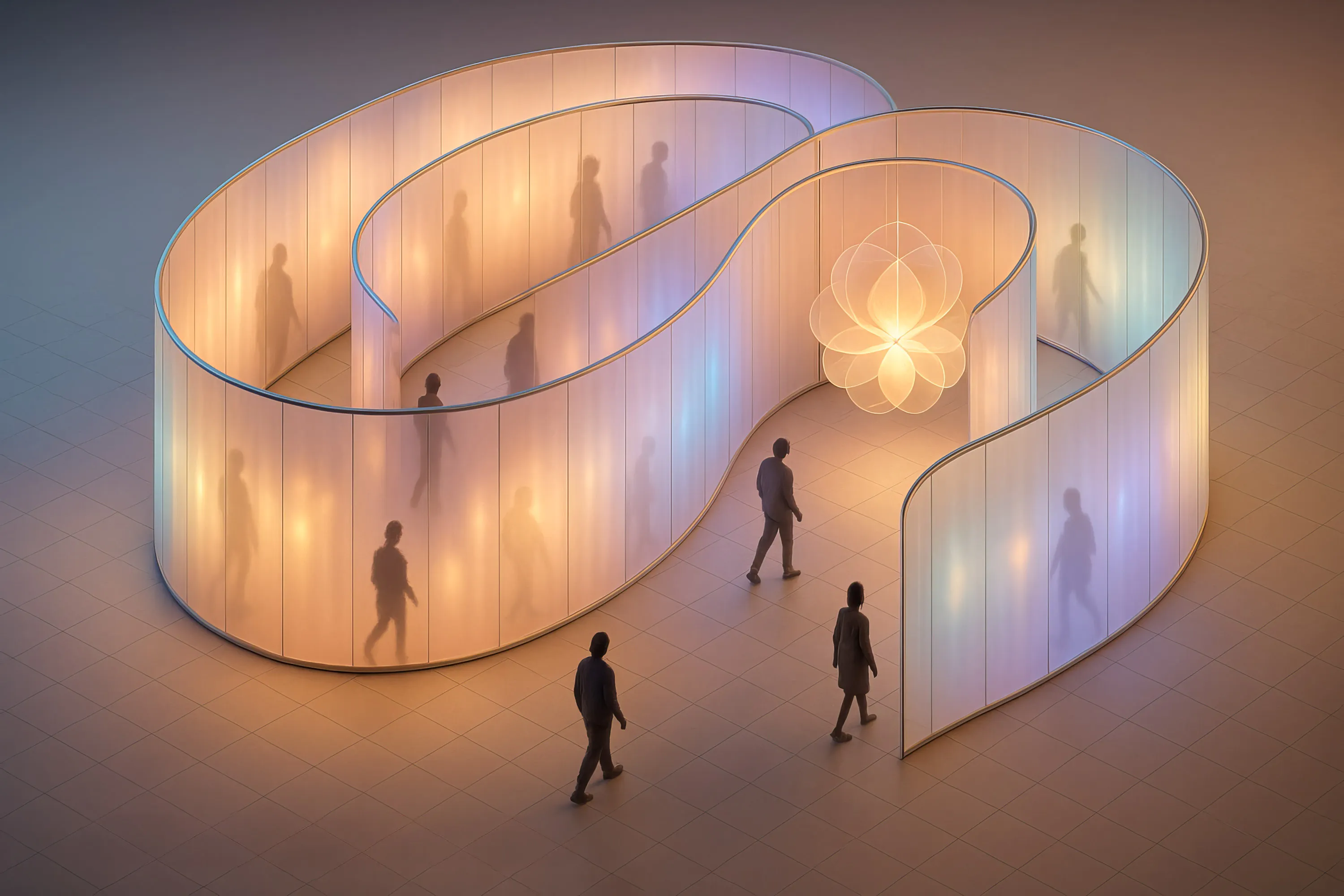
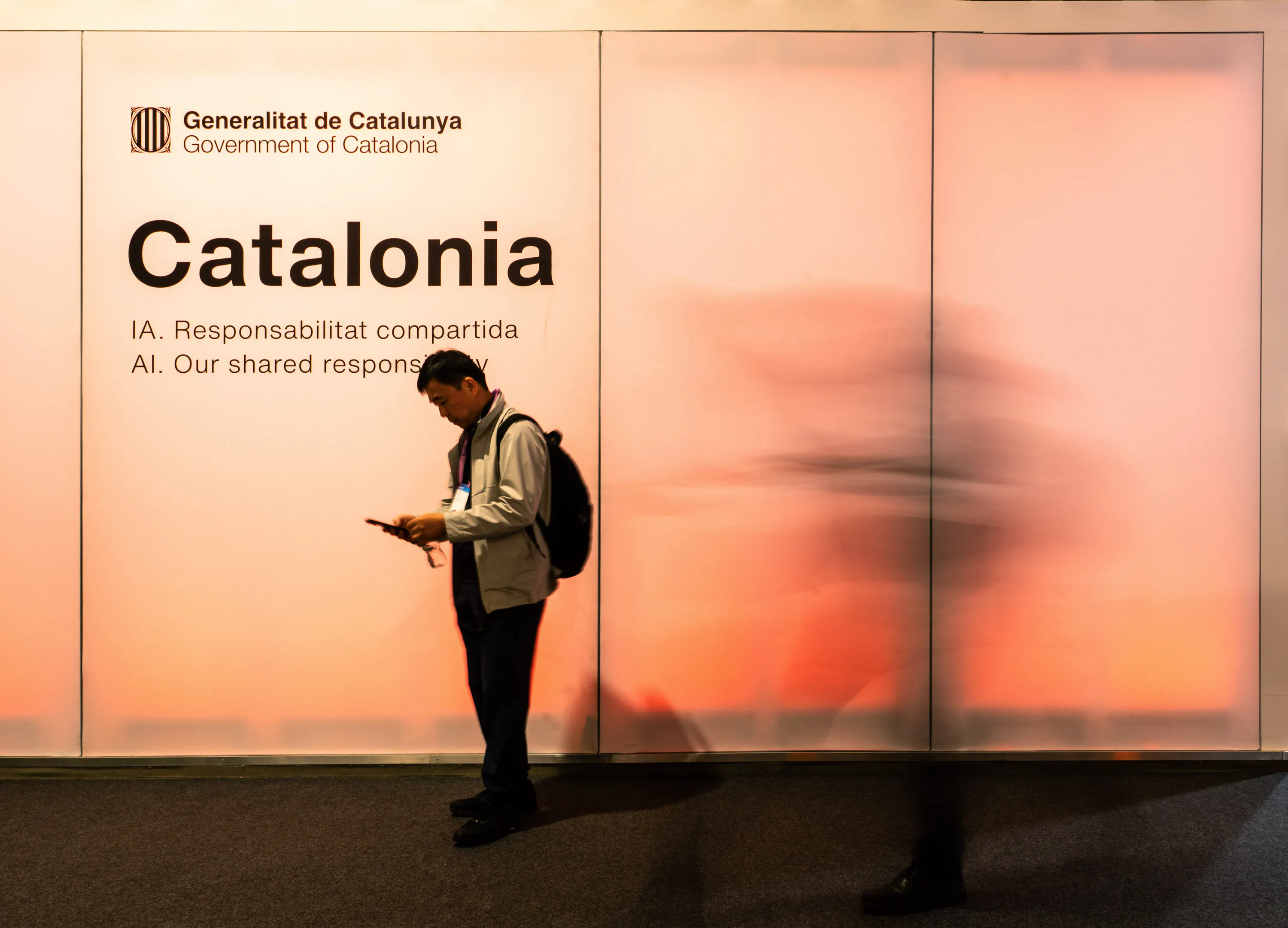
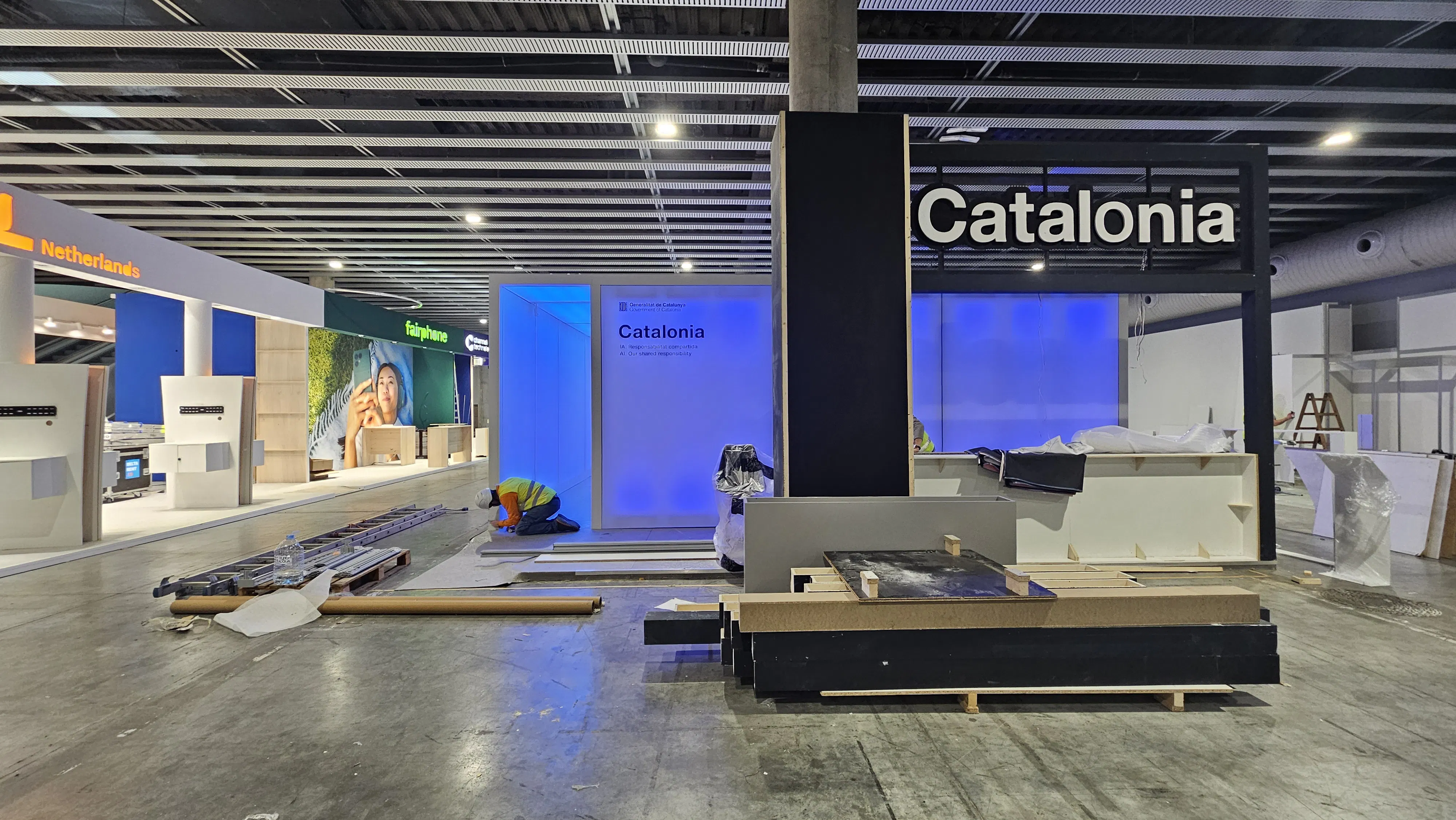
For the Mobile World Congress 2026, WAVM conceptualised, designed, and produced the main interactive experience for the Catalonia pavilion, the space of the Generalitat de Catalunya dedicated to showcasing the country’s potential as a technological and digital hub.
The installation, titled Two Paths – Infinite Futures, offered an immersive experience driven by light, movement, and human presence, where the space reacted in real time to visitors’ movements.


Context
Every year, the Mobile World Congress brings the world’s leading technology players to Barcelona. In this context, the Catalonia pavilion acts as a showcase for the country's digital and technological ecosystem.
For the 2026 edition, the Generalitat de Catalunya launched a public competition to develop an interactive experience capable of making a strong visual impact and attracting the attention of congress visitors.
WAVM’s proposal was selected as the winning project.
The Challenge
The briefing asked for an interactive, disruptive experience with a strong visual impact, capable of standing out in a stimulus-saturated environment like the Mobile World Congress.
Our response was radical: remove all screens.
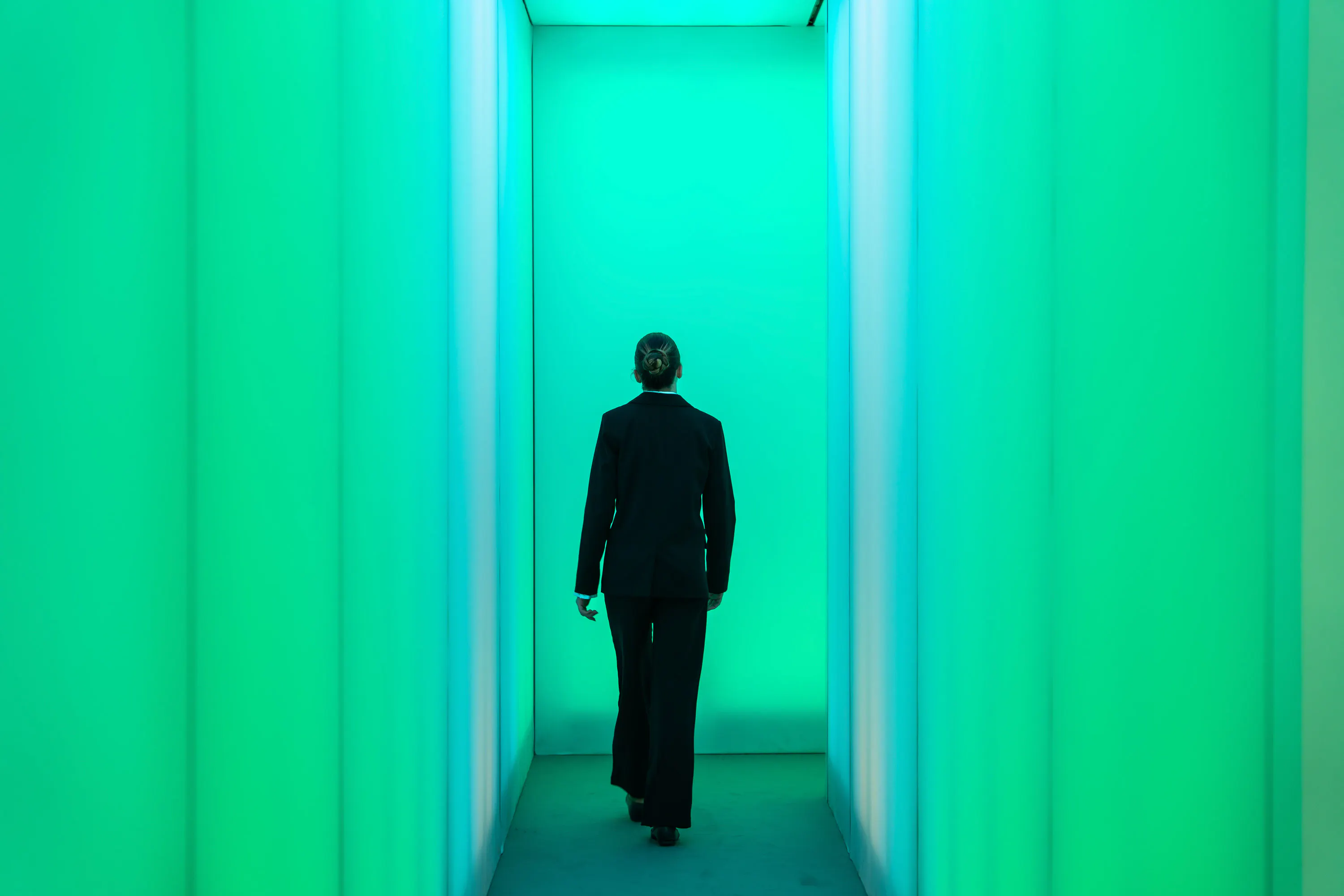
We decided to work only with light as material and language. A light that can react, accompany, and transform the space in real time.
From there, the challenge was to build an experience that is not just observed, but crossed through. A path that makes the visitor an active part of the system.
Bringing this idea to life was, in itself, the real project.
Concept
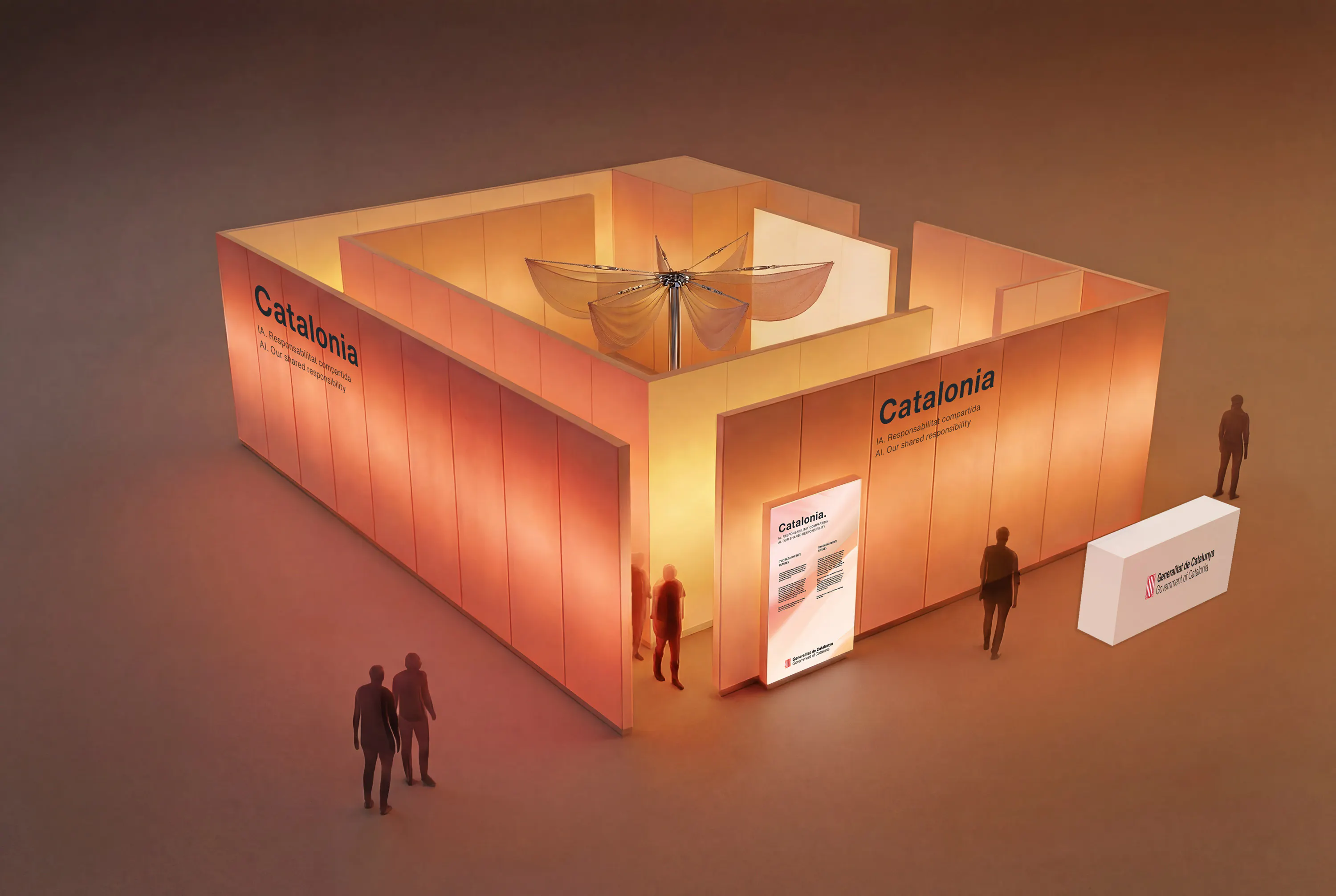
Two Paths – Infinite Futures explores the relationship between people, space, and technology through an interactive journey.
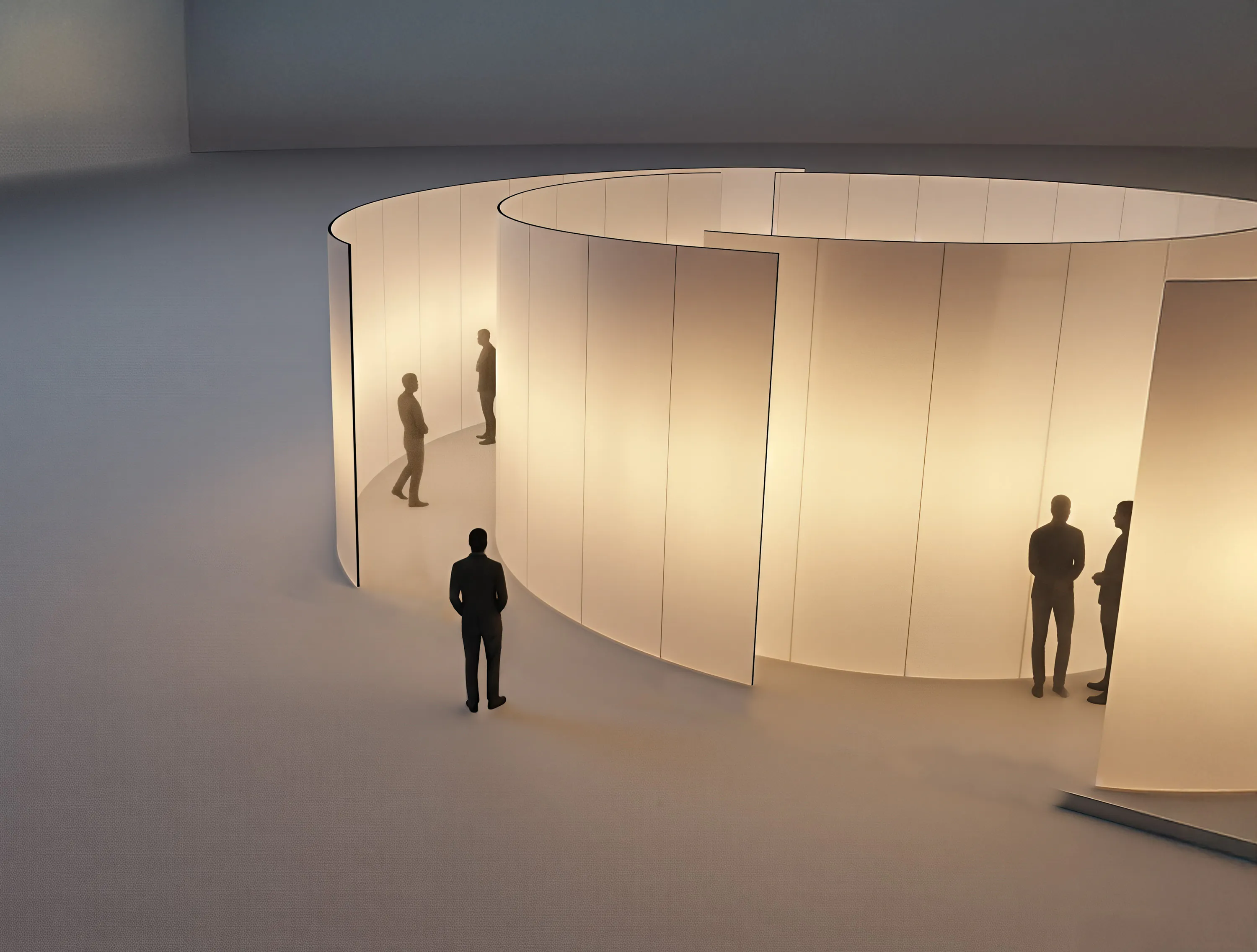
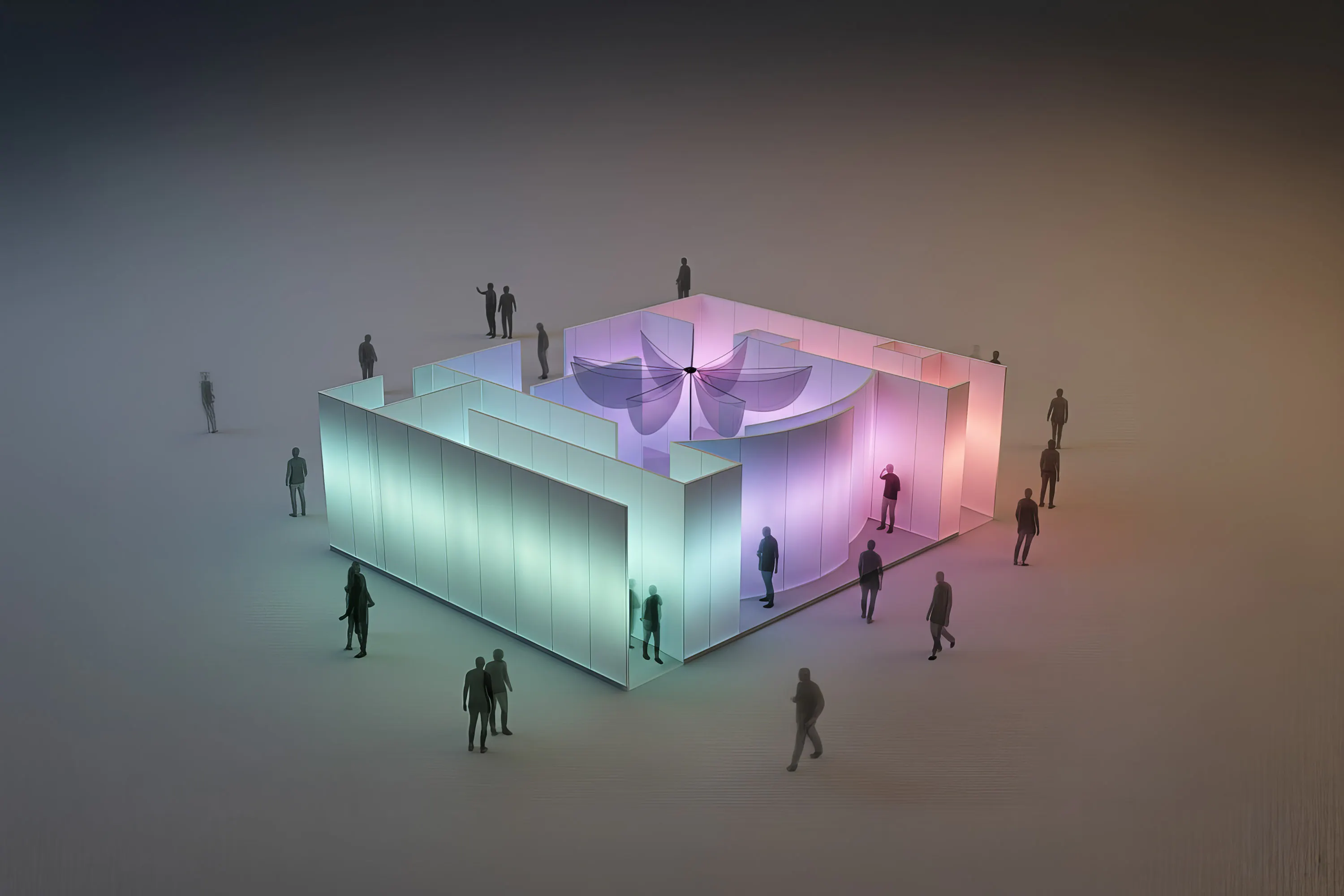
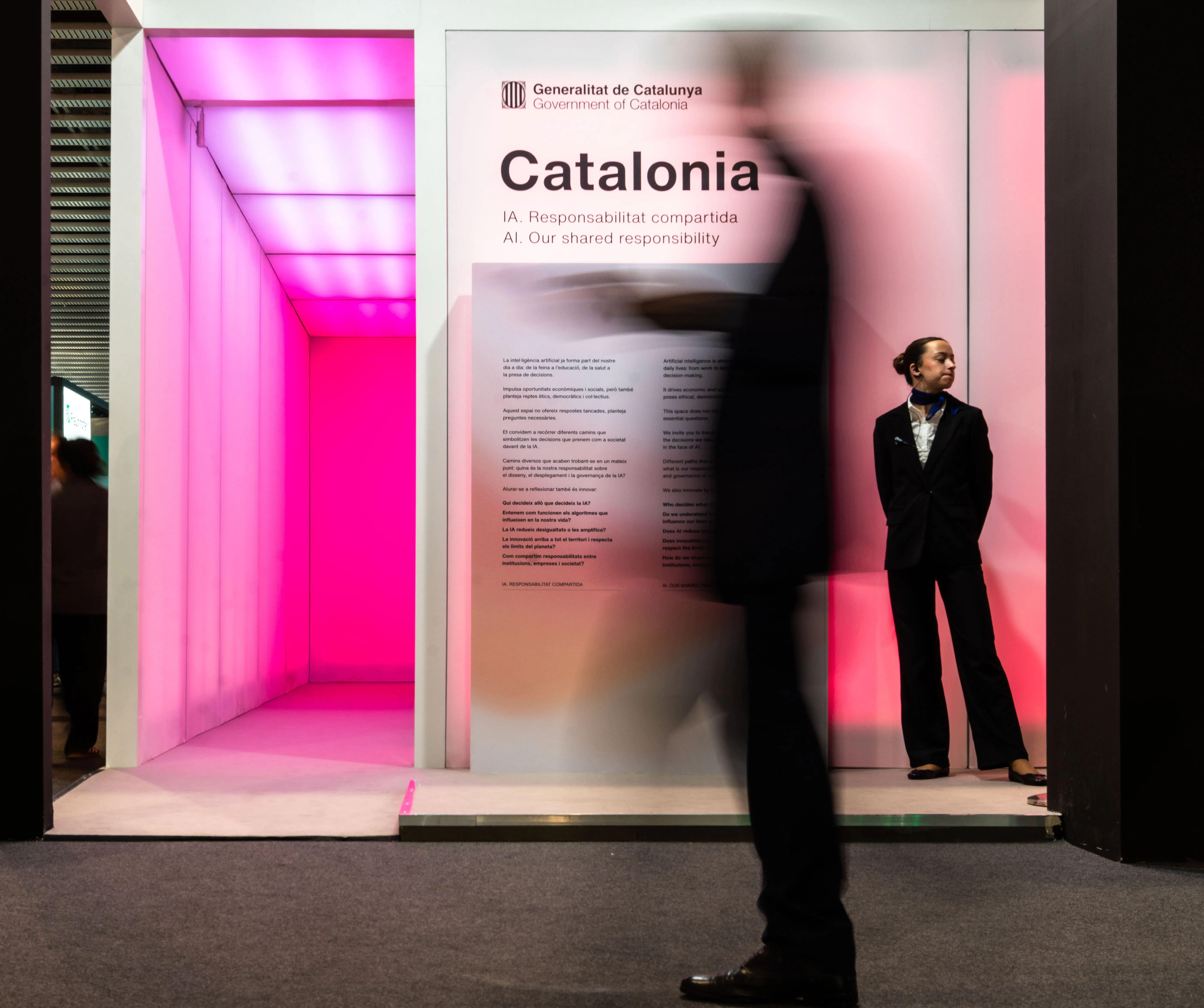
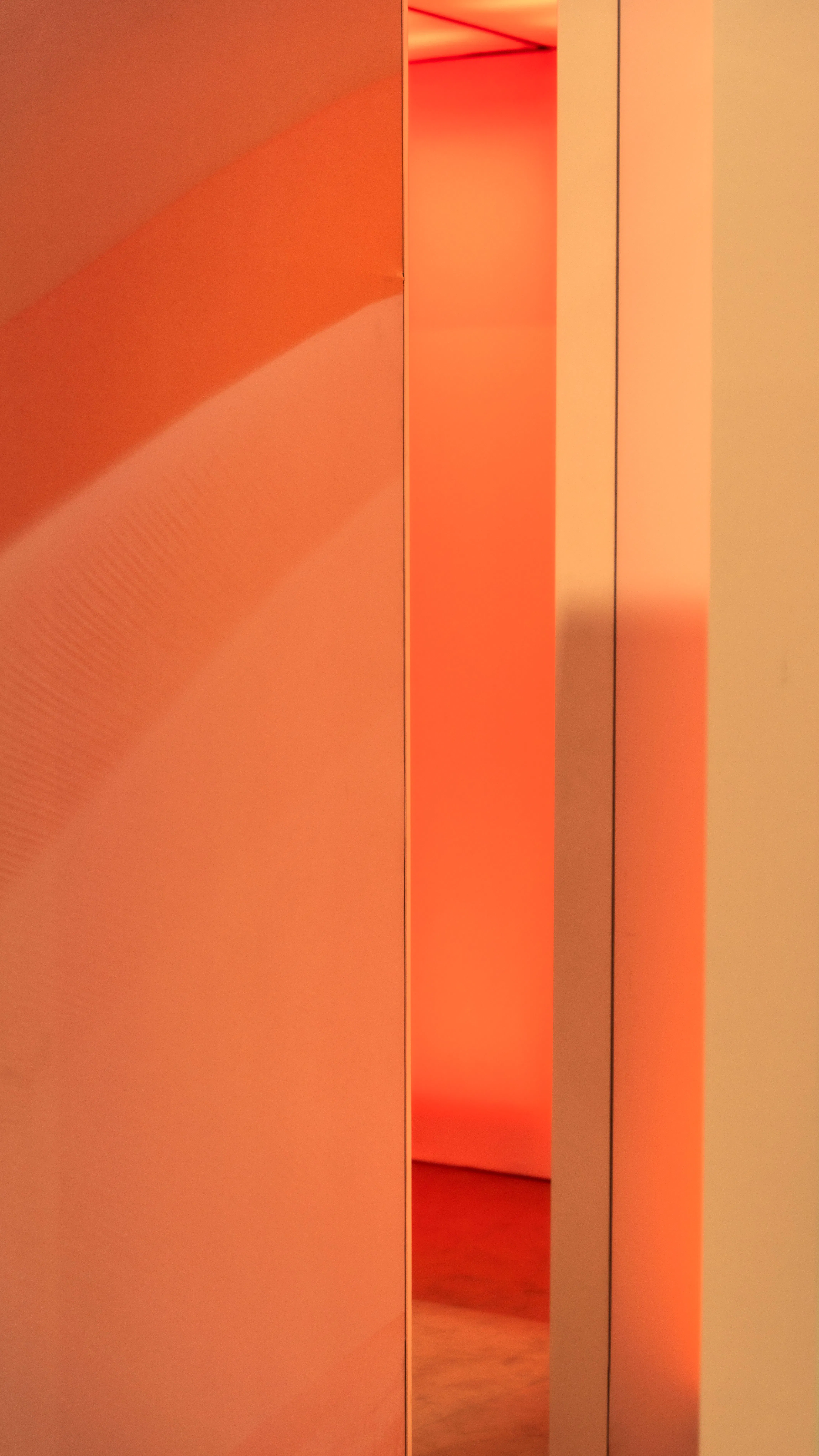
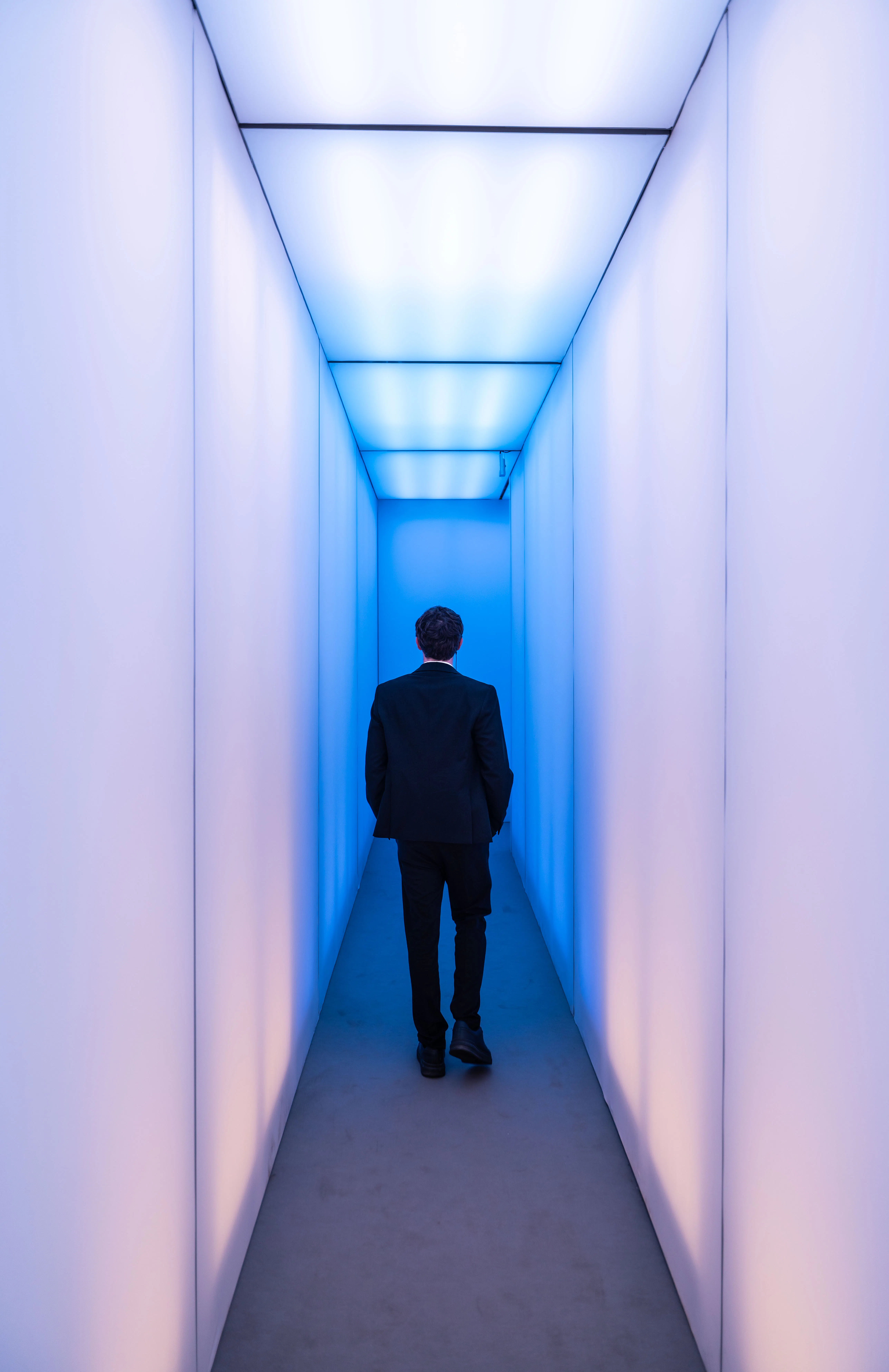
The installation is structured as an experience in three moments: choice, transit, and encounter. Visitors are invited to choose between two paths that react differently to their movement, transforming their presence into light and progressively activating the space.
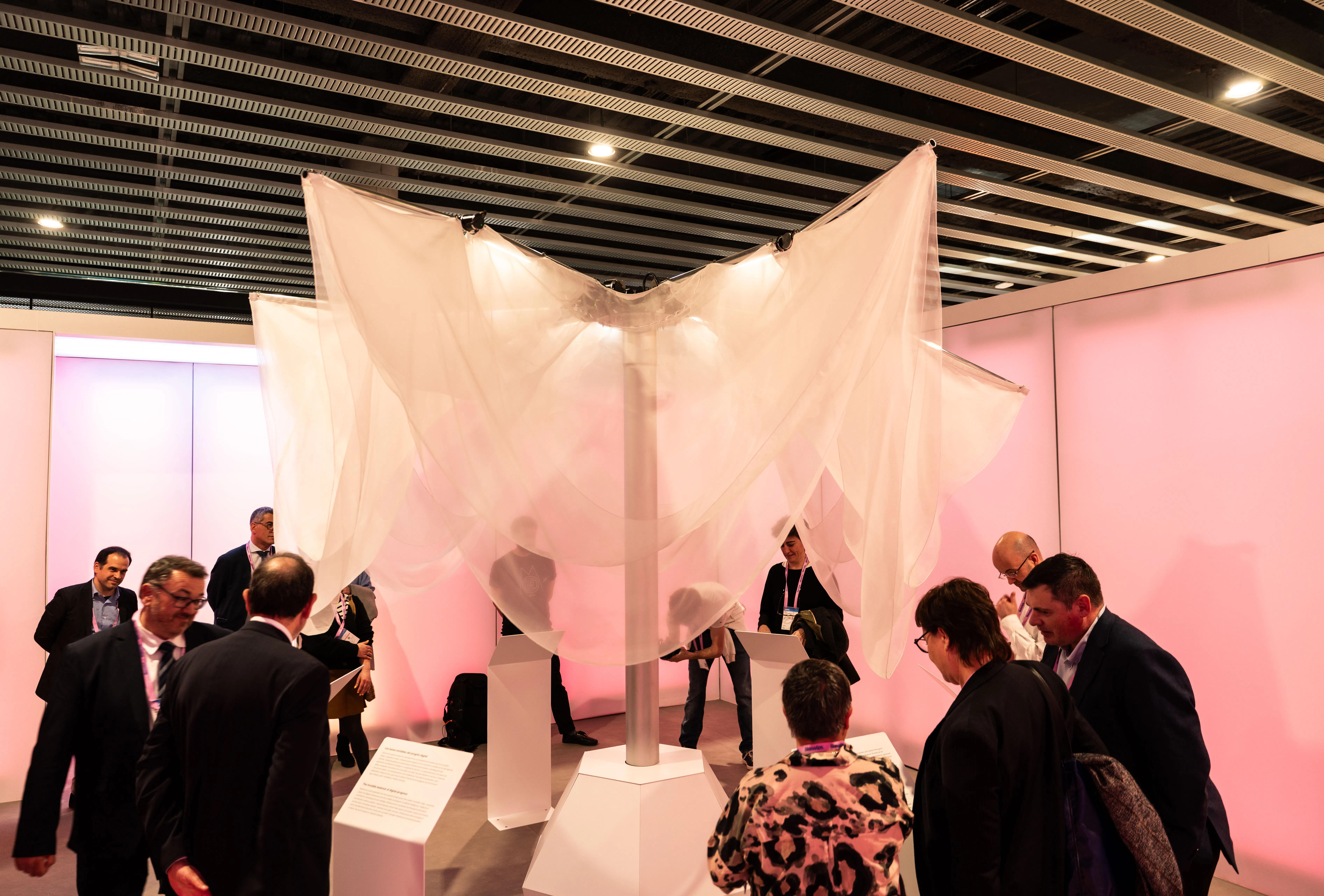
Both routes finally converge in a shared central space where collective interaction becomes the driving force of the installation.
The Metaphor
The installation is built around a metaphor.
Light acts as an invisible presence that accompanies, follows, and responds to visitors. A technology that is there, that listens and adapts, without needing to be visible.
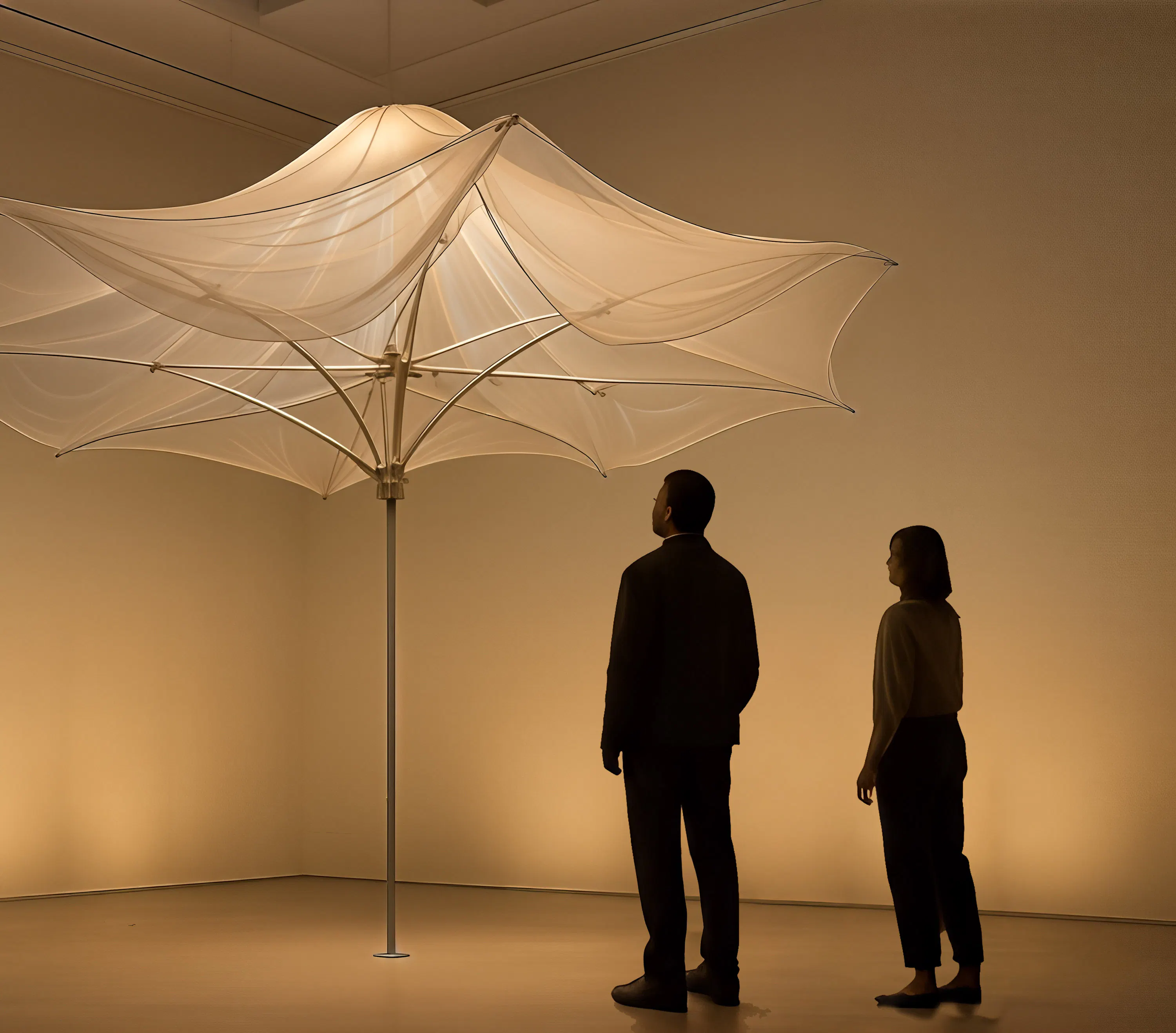
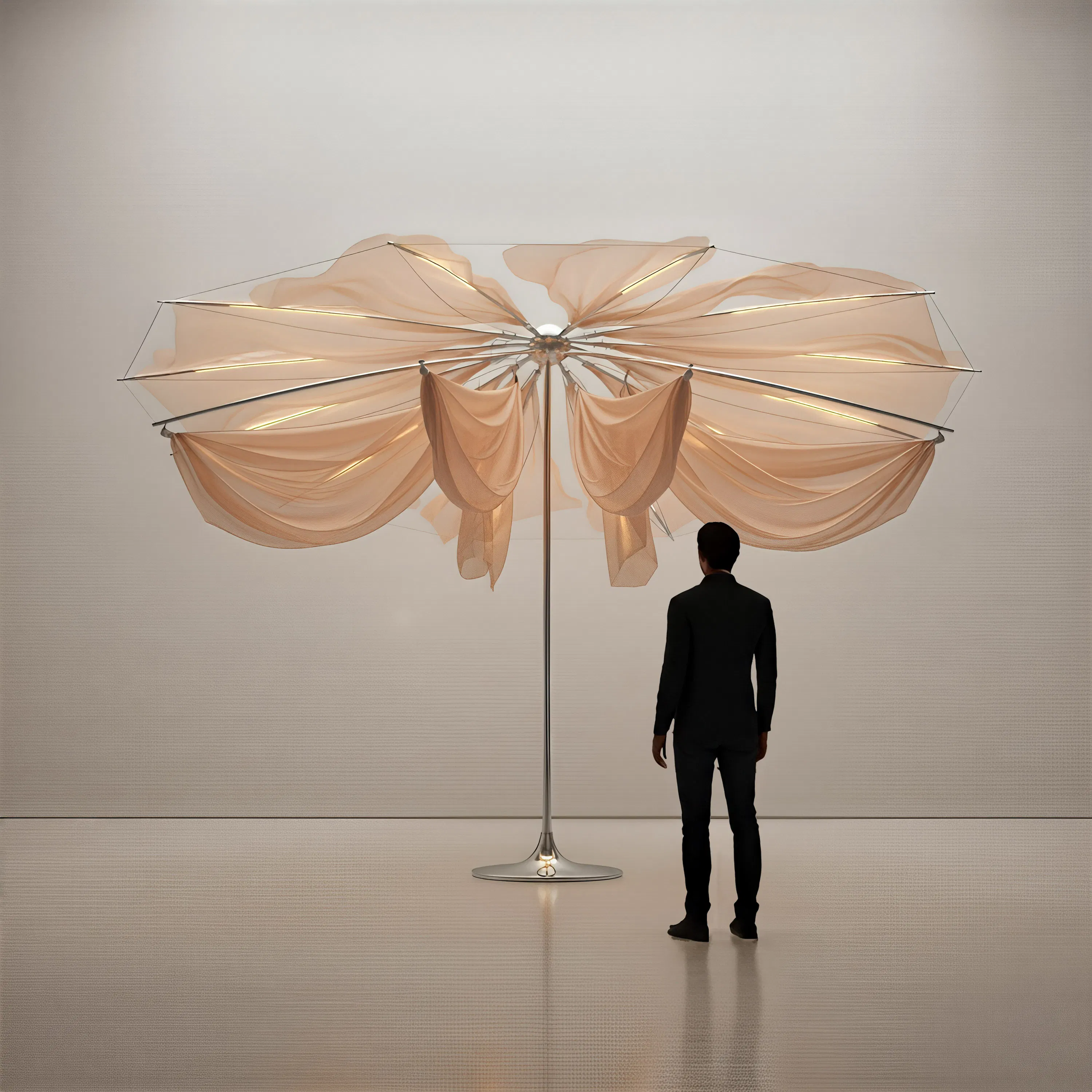
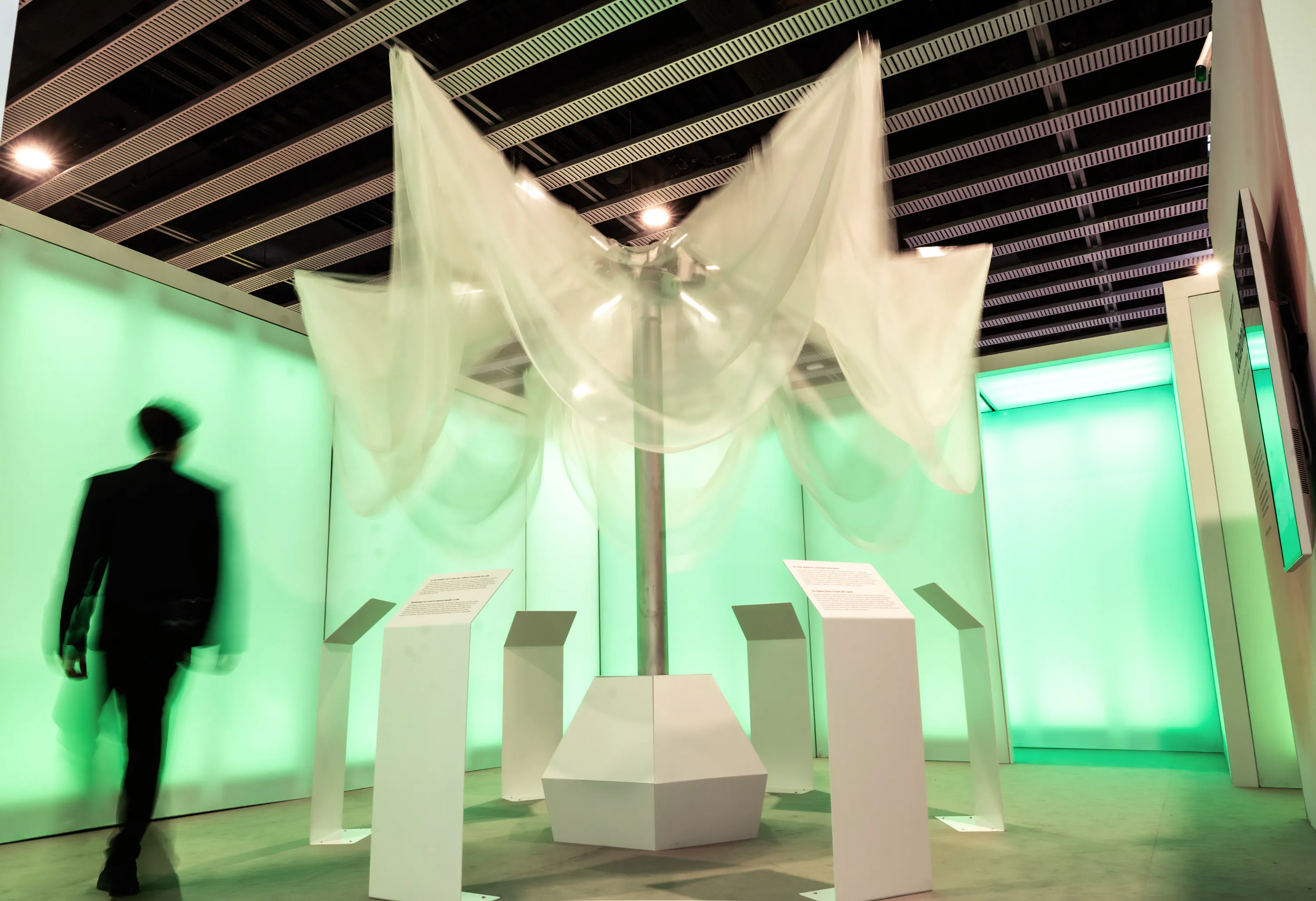
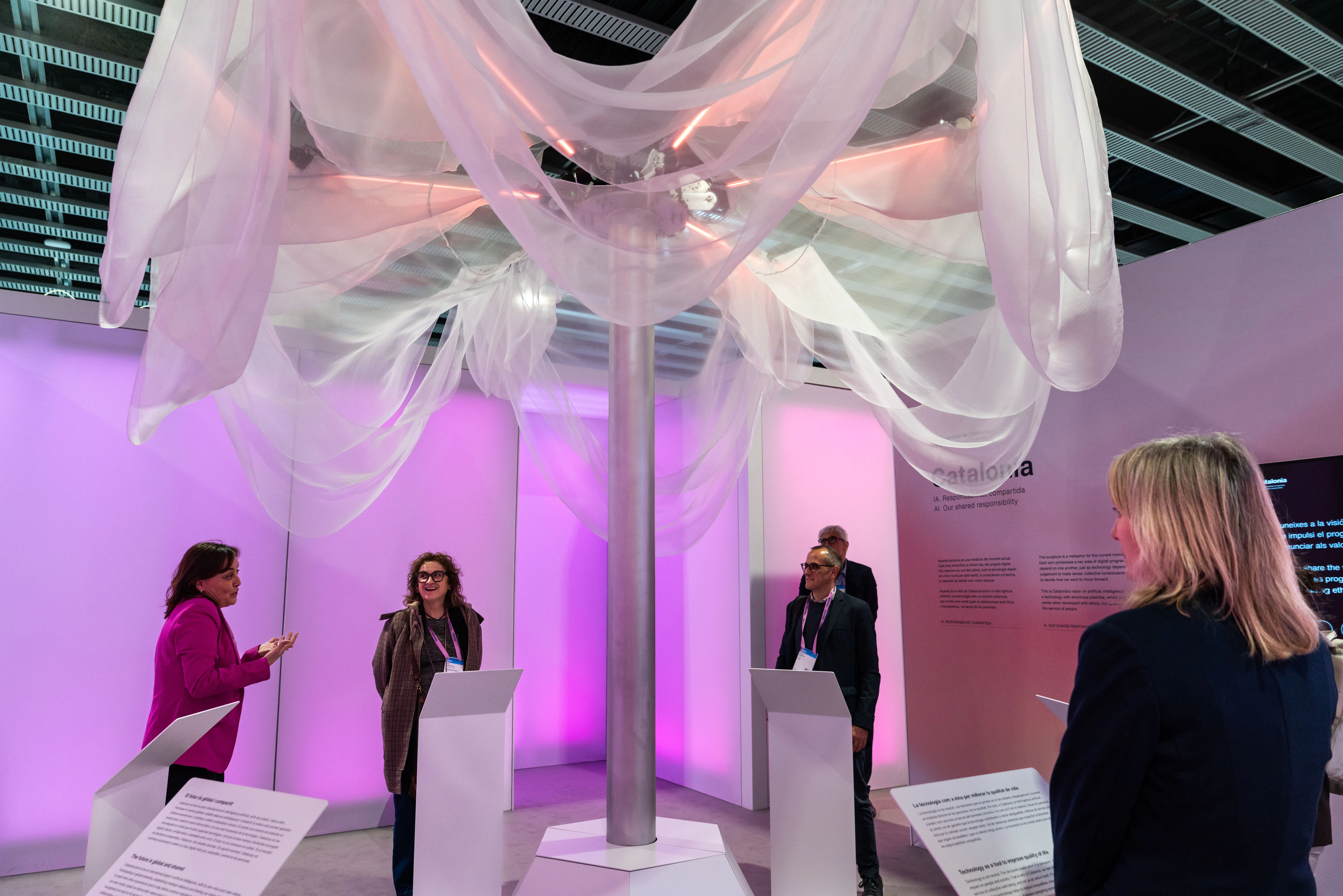
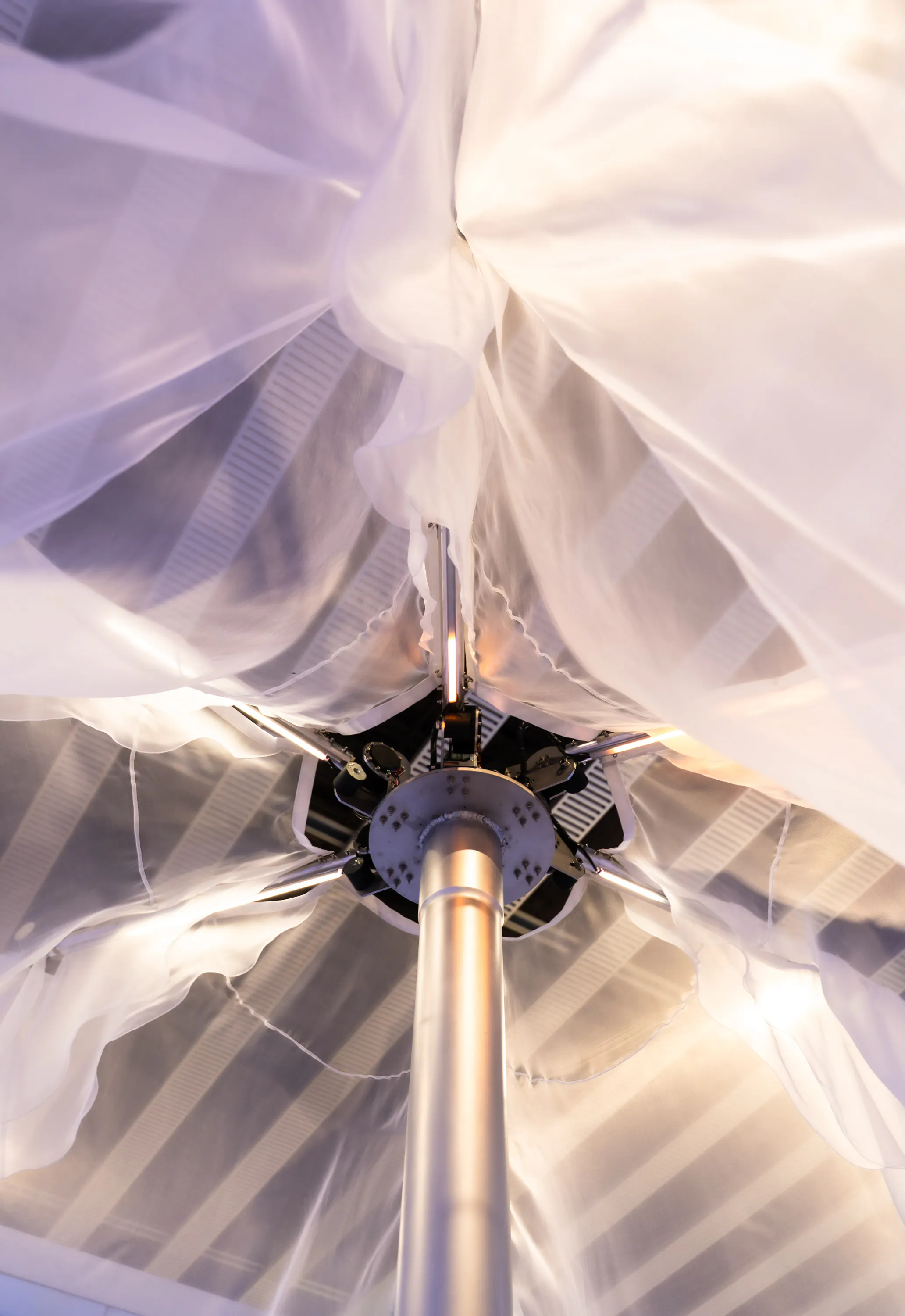
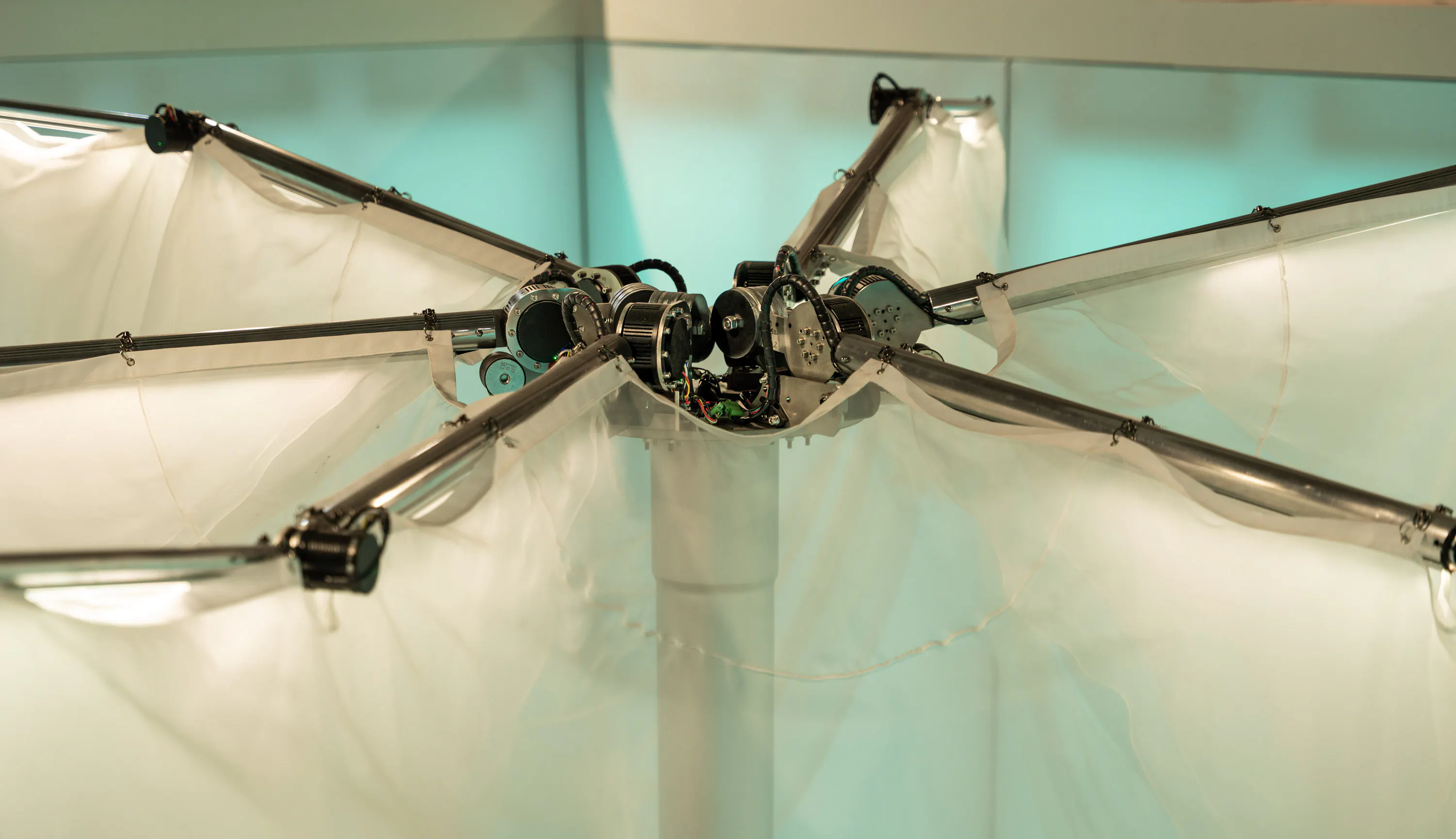
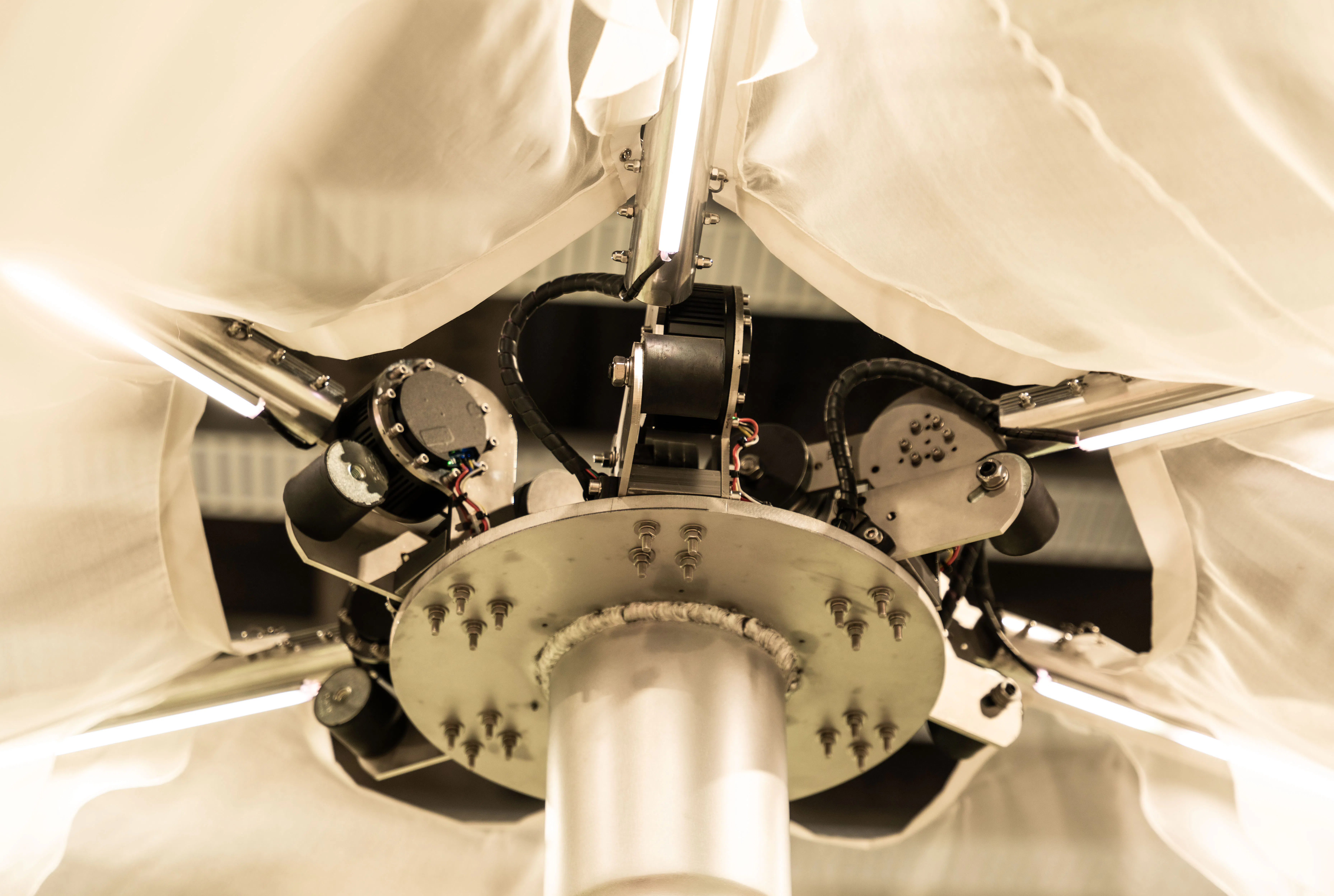
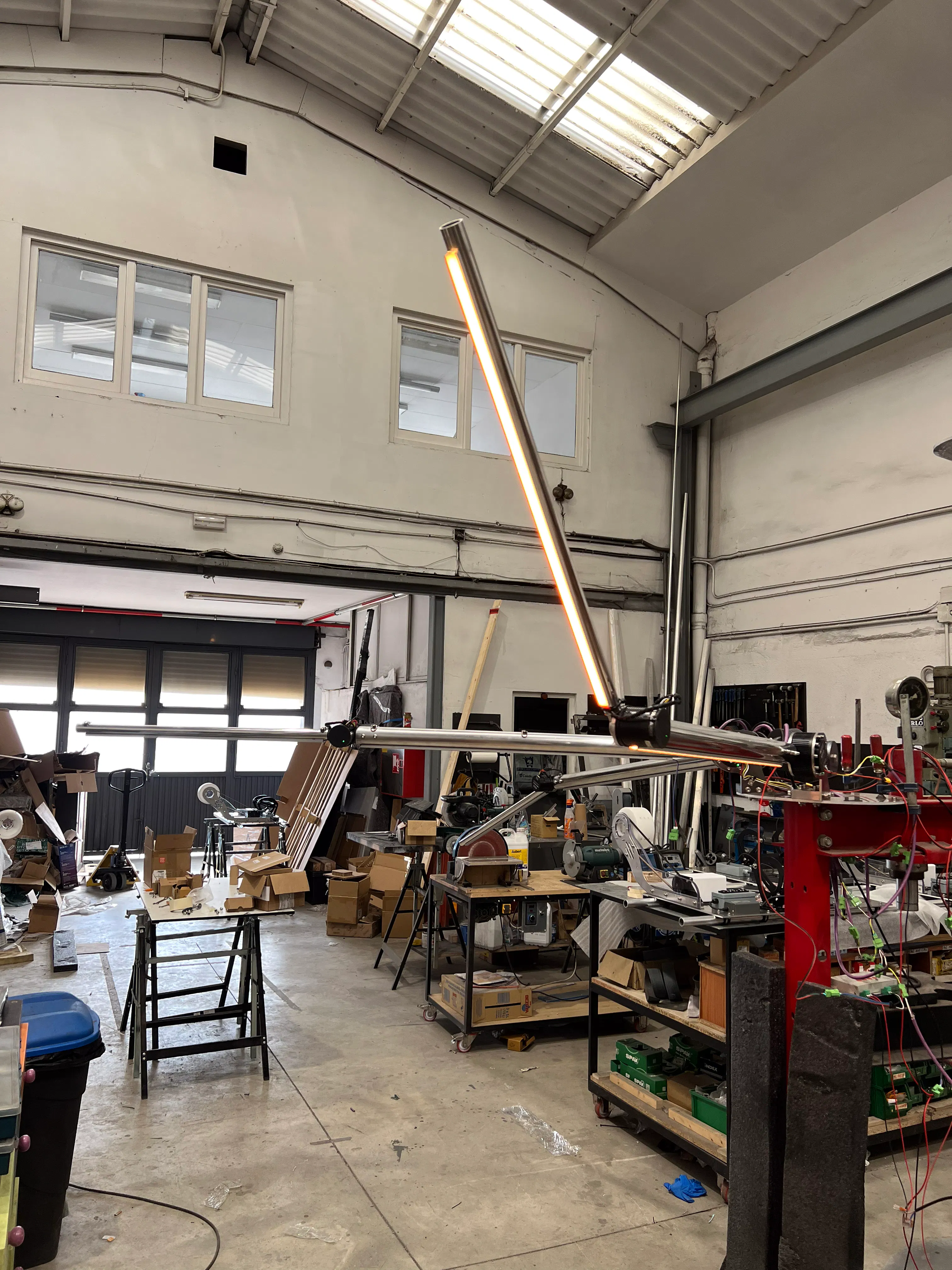
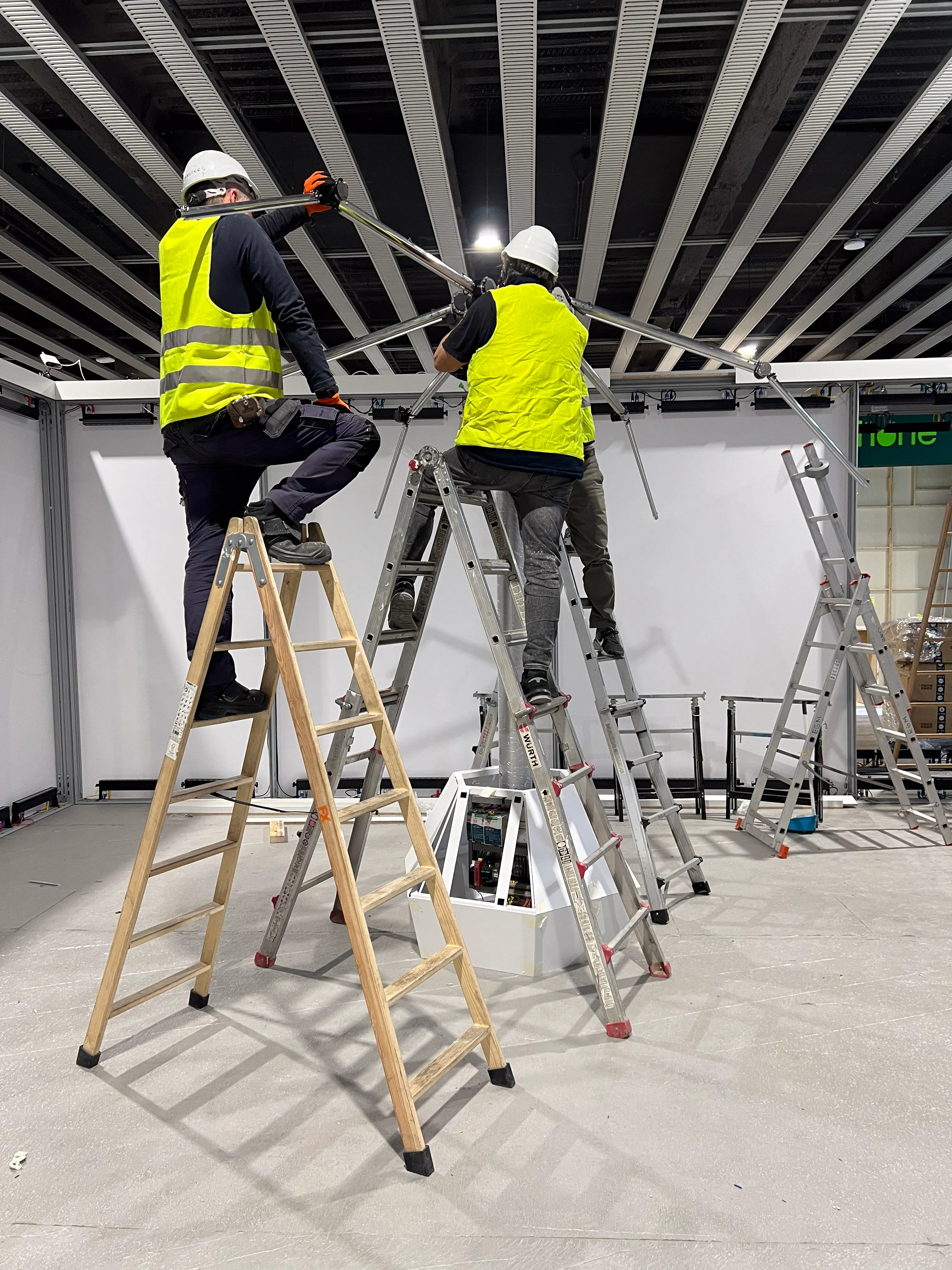
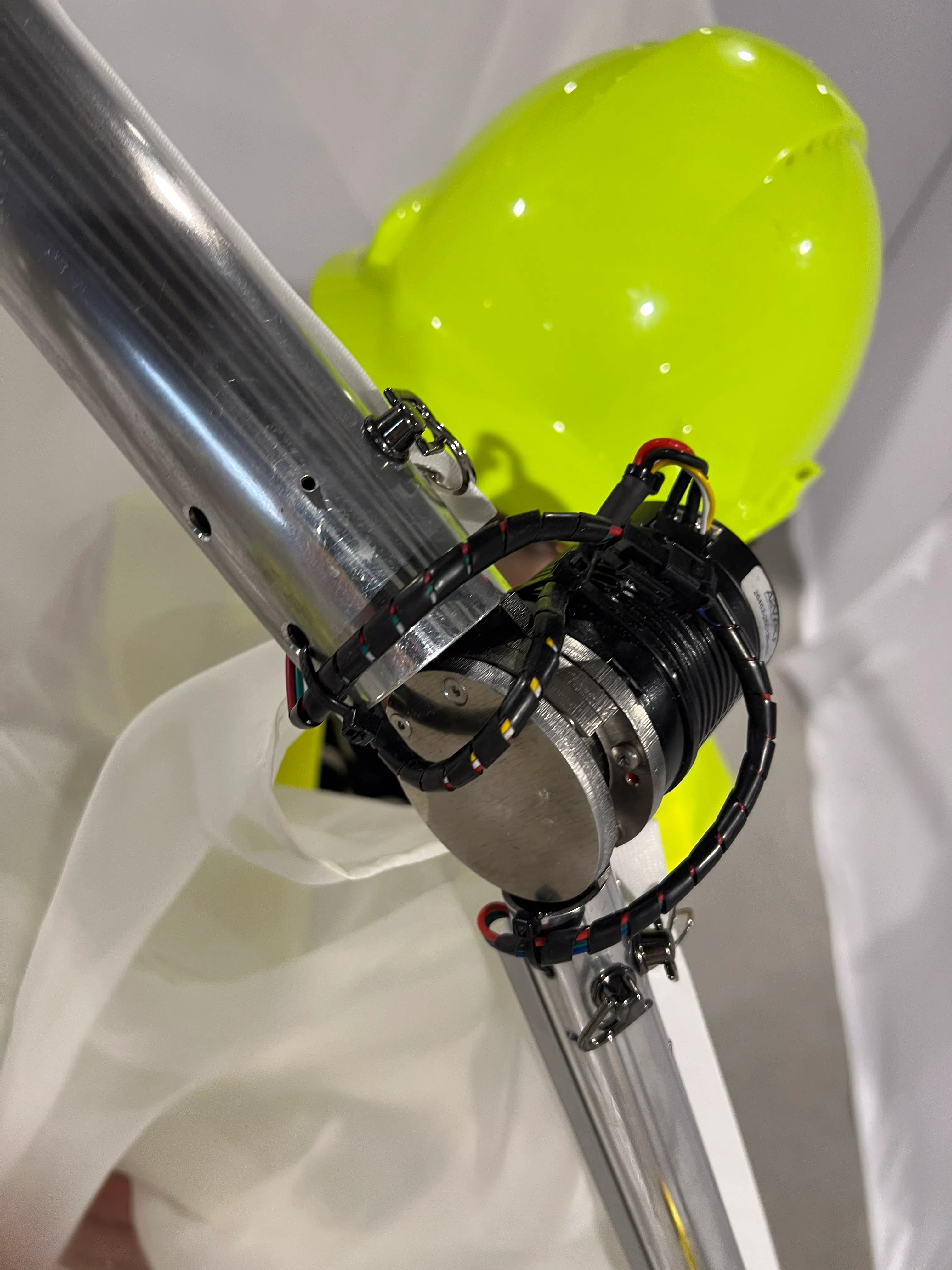
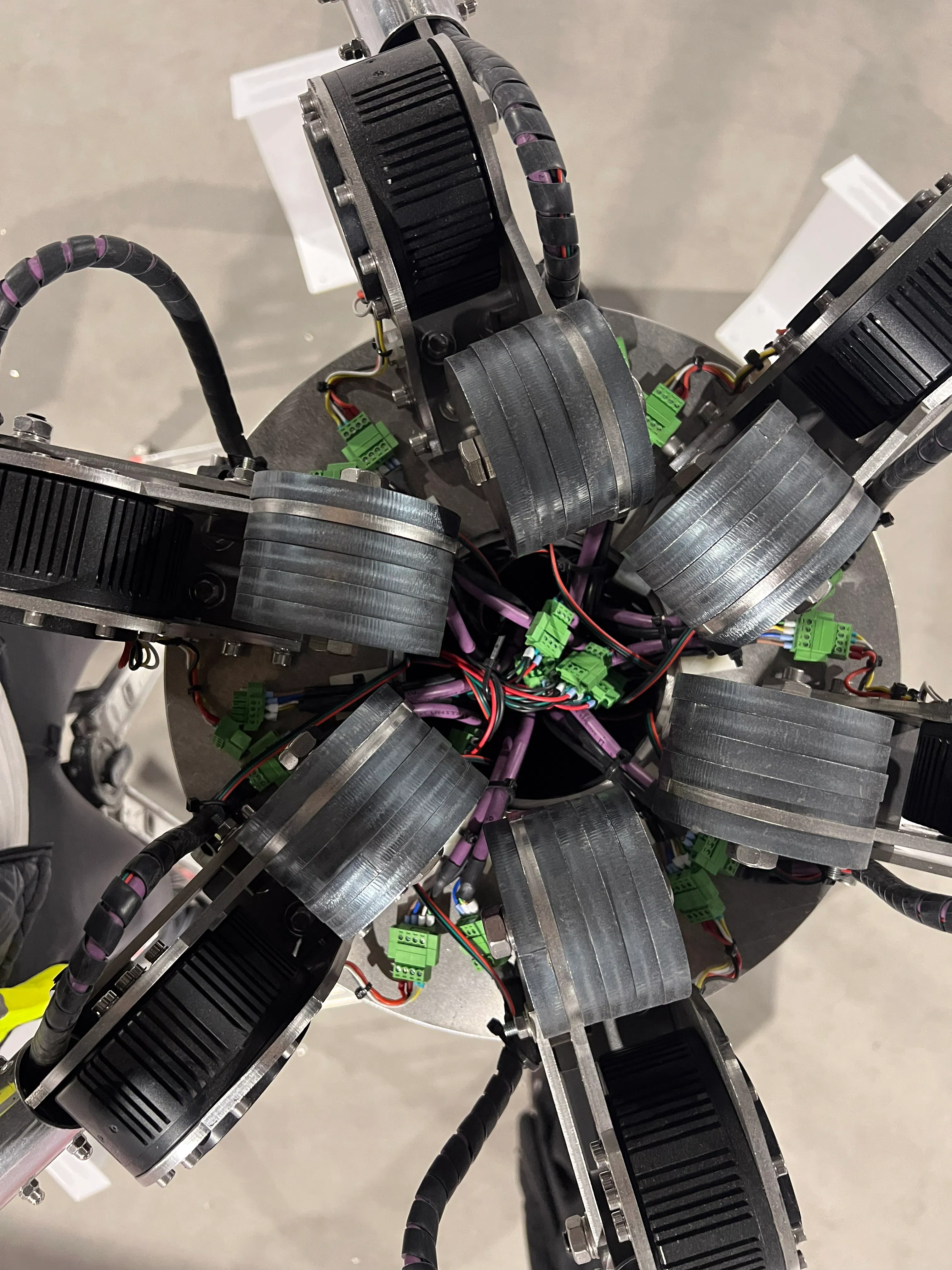
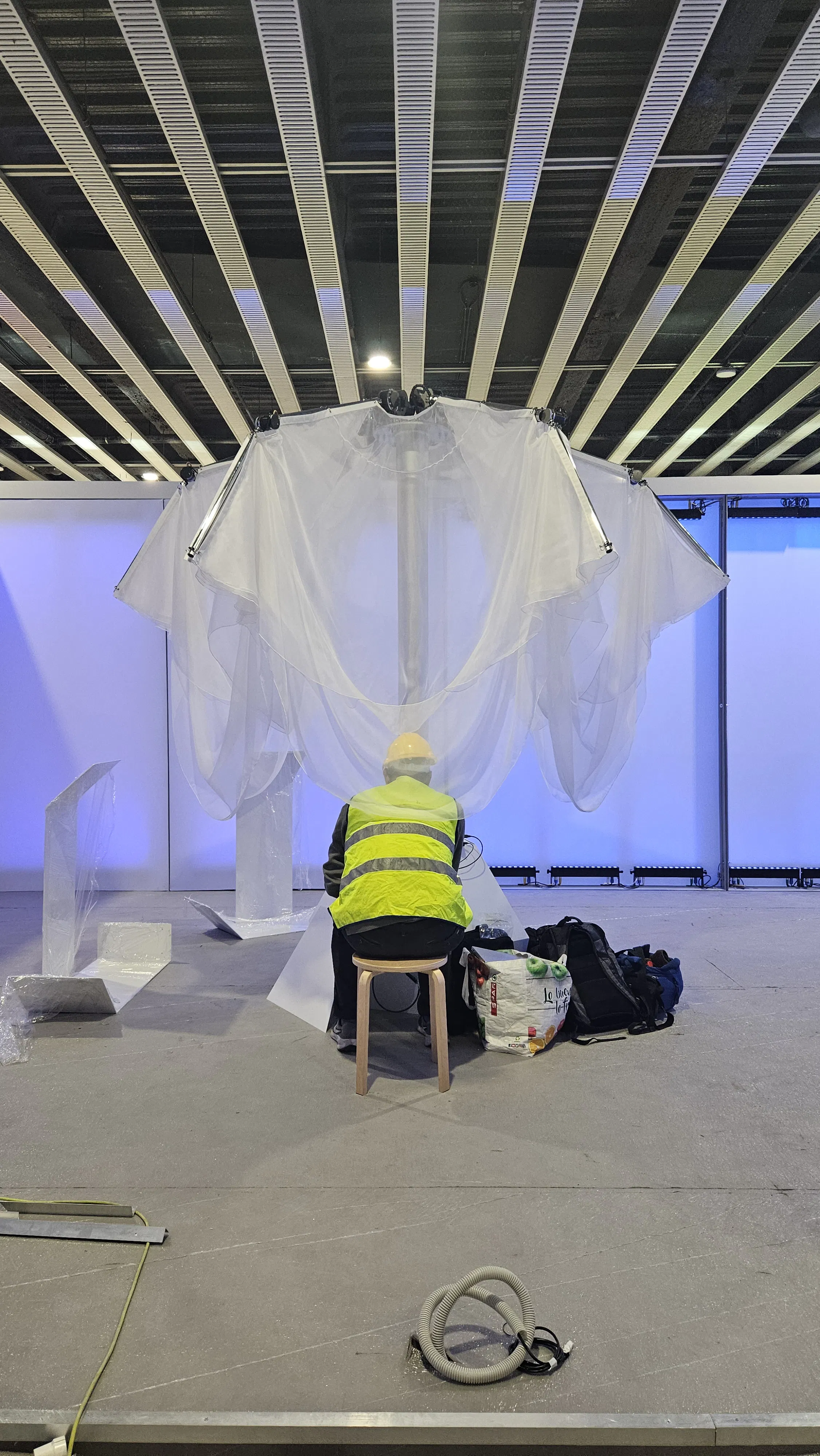
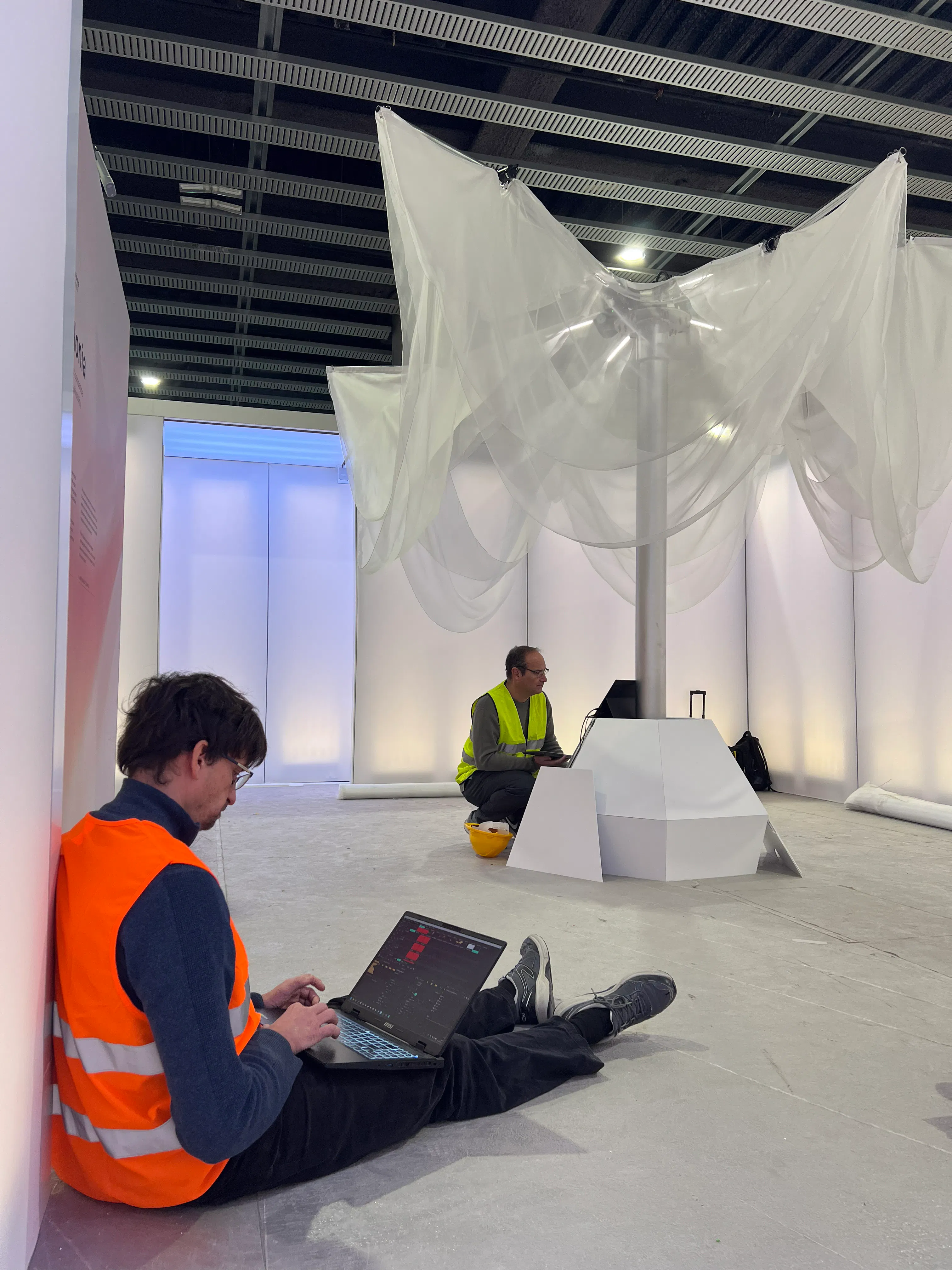
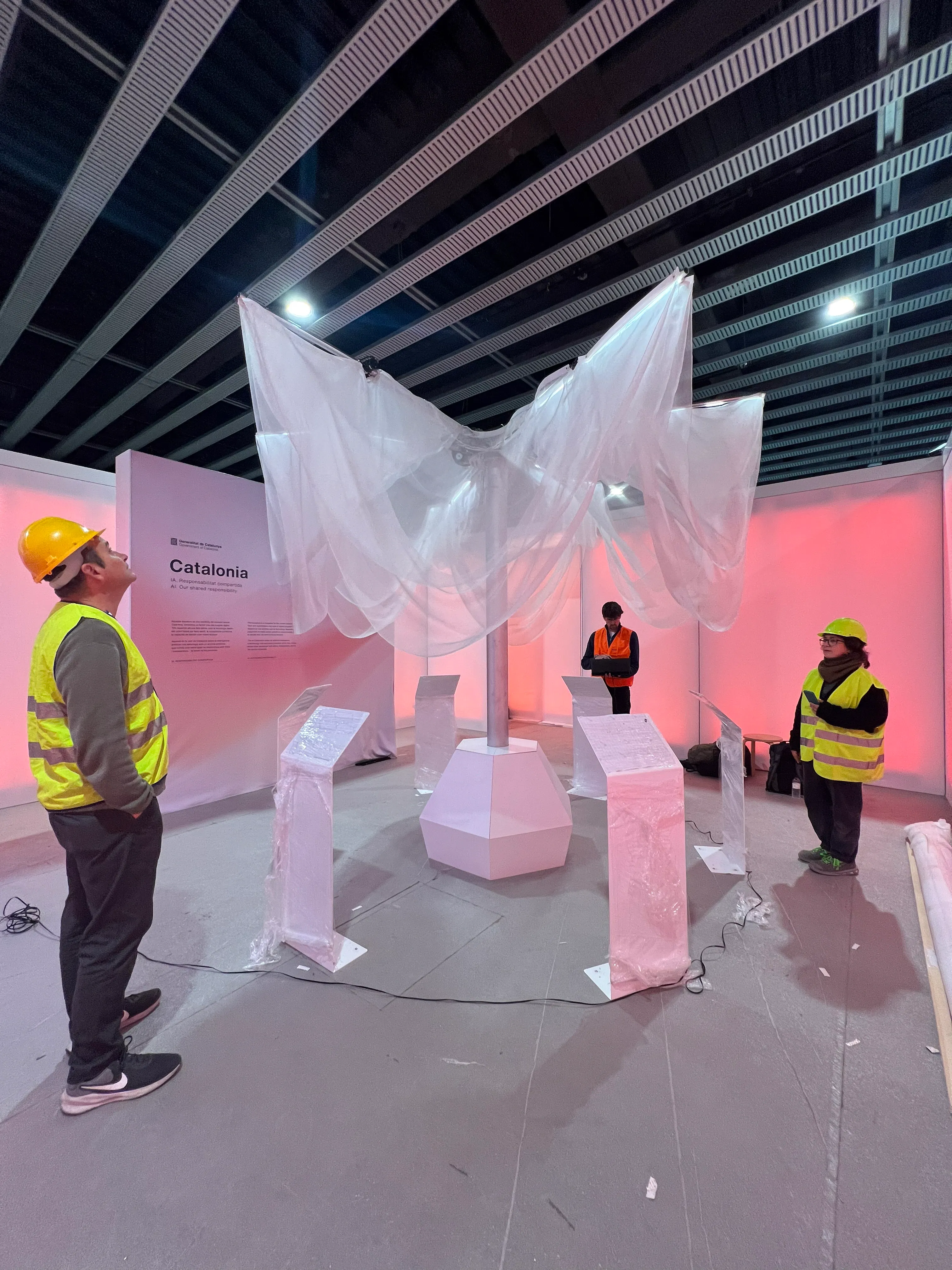
At the centre, the kinetic sculpture reveals its structure: metal, joints, mechanisms. The most essential and direct part of the technology.
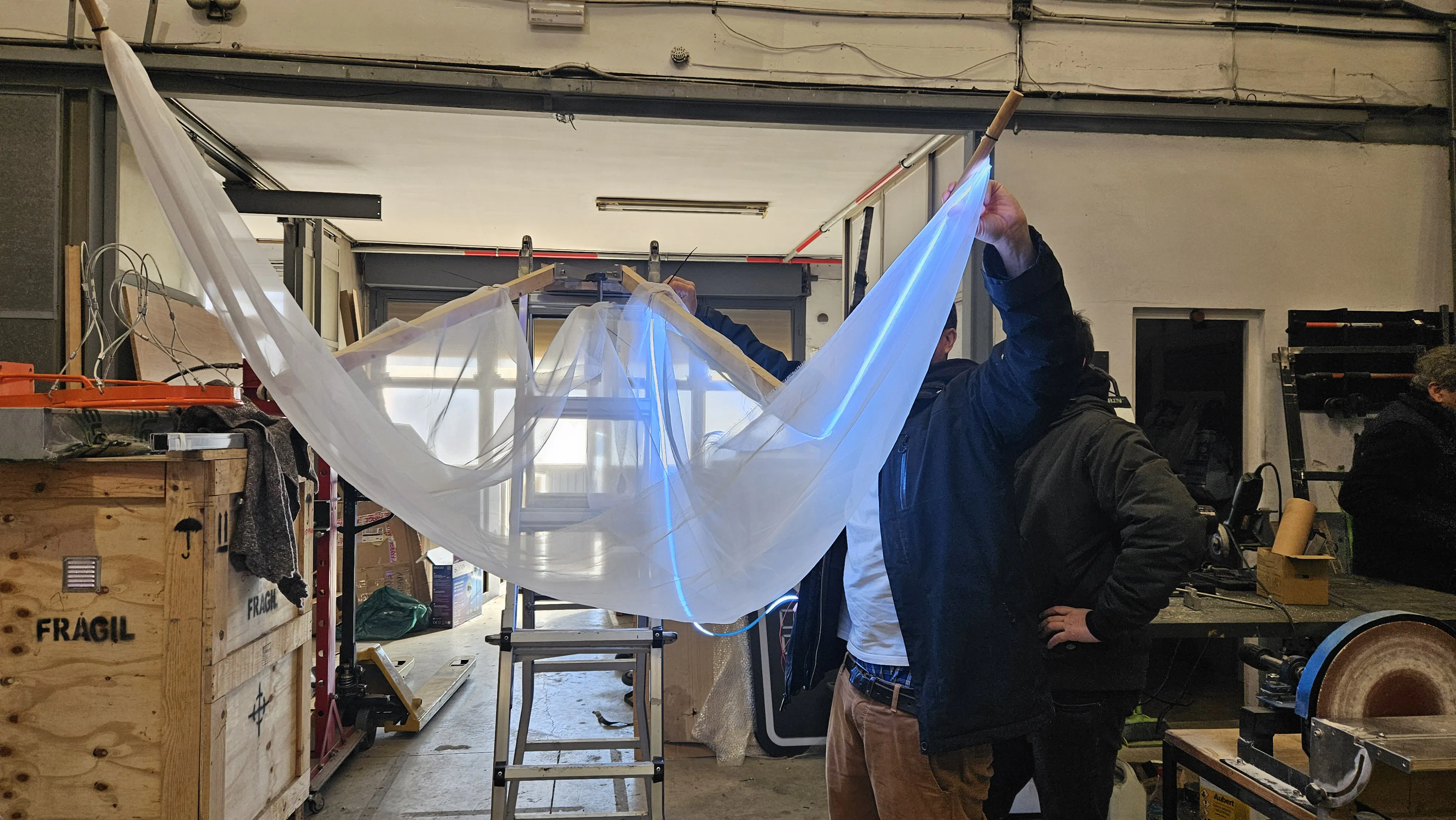
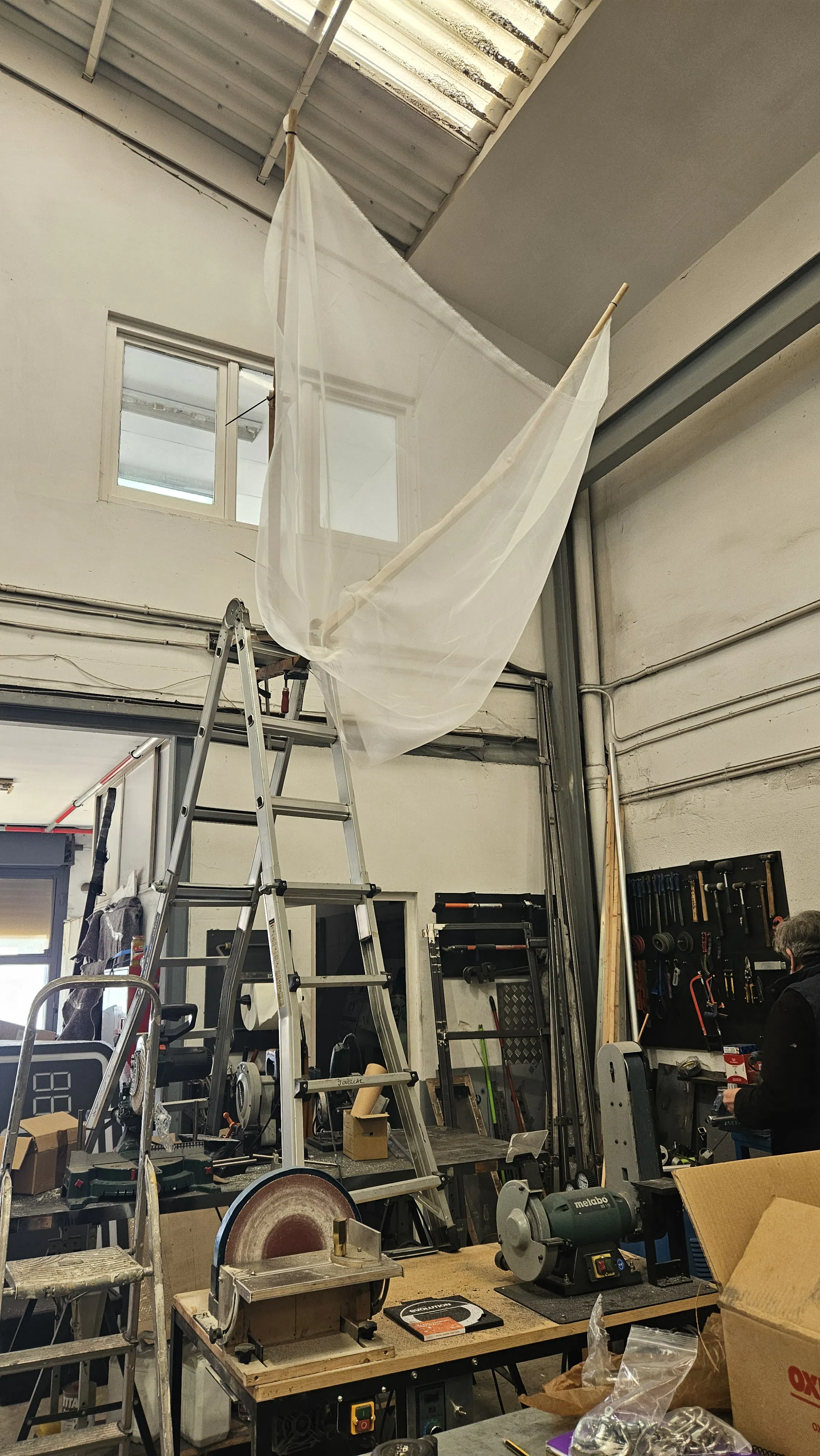
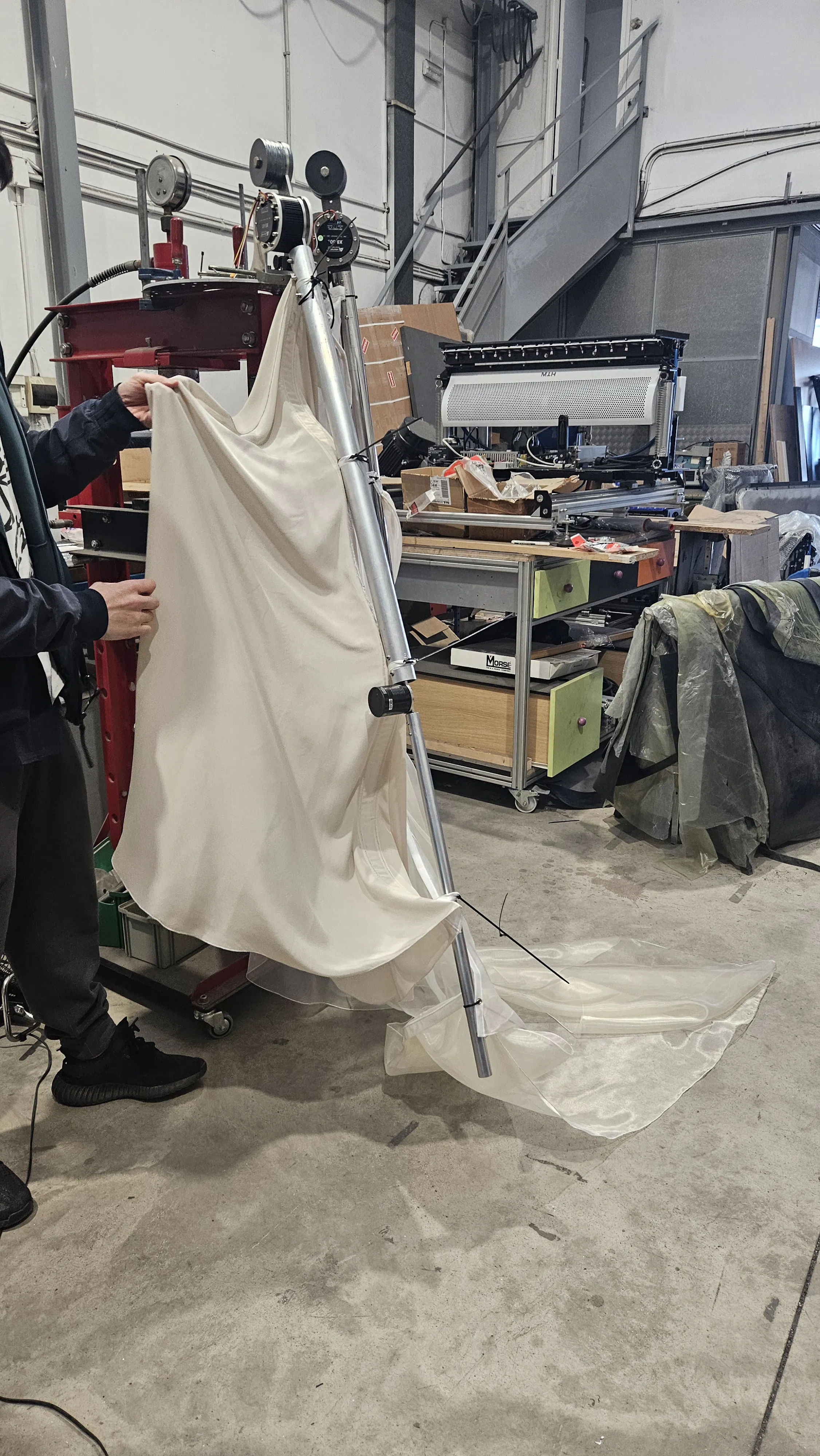
This structure is surrounded by natural silk that connects the arms together. An organic layer introducing fragility, continuity, and connection.
The silk represents the human fabric: society, people, what gives meaning and context to technology.
When visitors approach, the sculpture leans and responds. The system doesn’t impose: it modulates, adapts, and relates to whoever activates it.
Technology
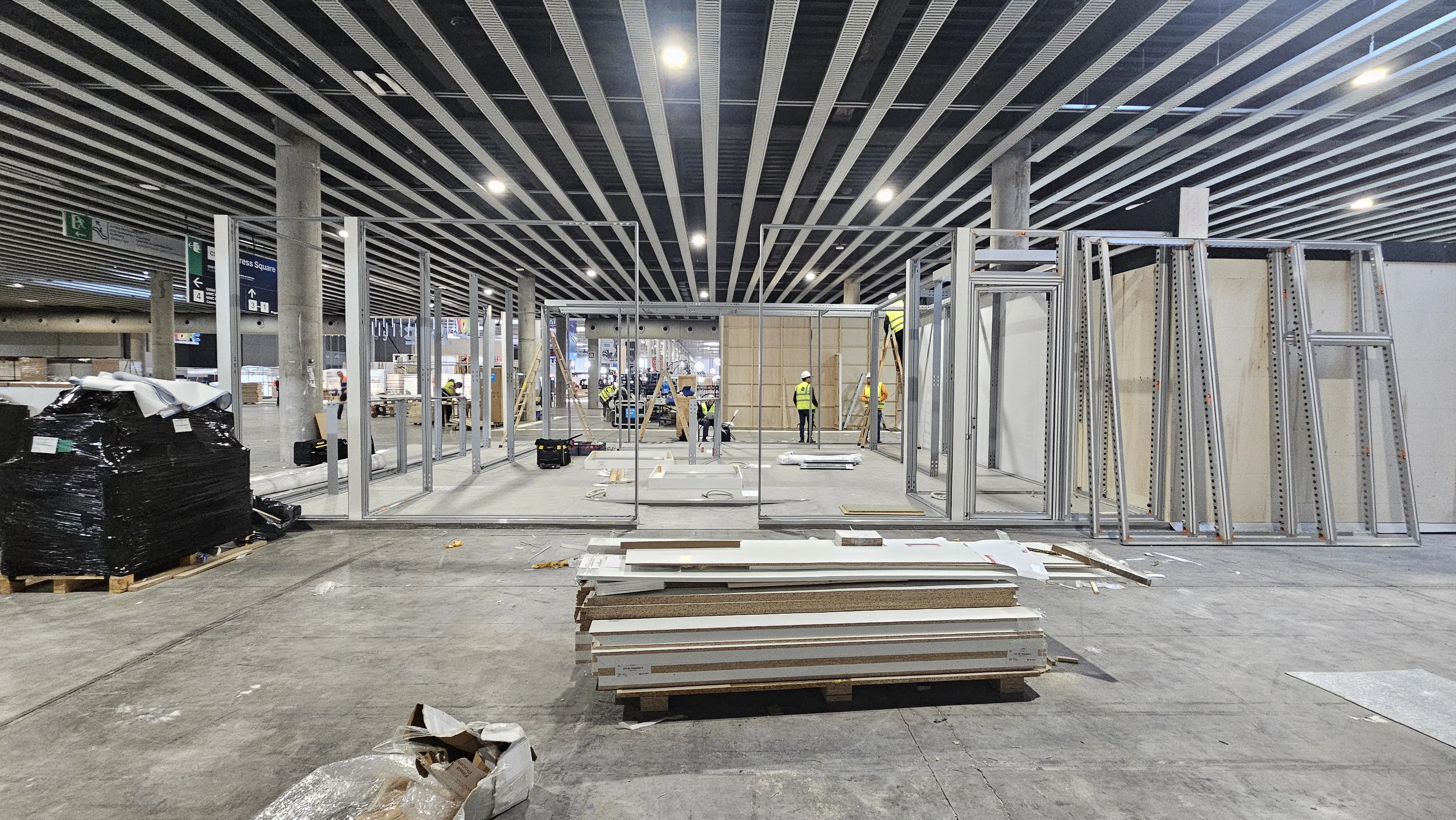
The installation combined ephemeral architecture, interactive systems, and kinetics in a single experiential piece.
Main elements of the project included:
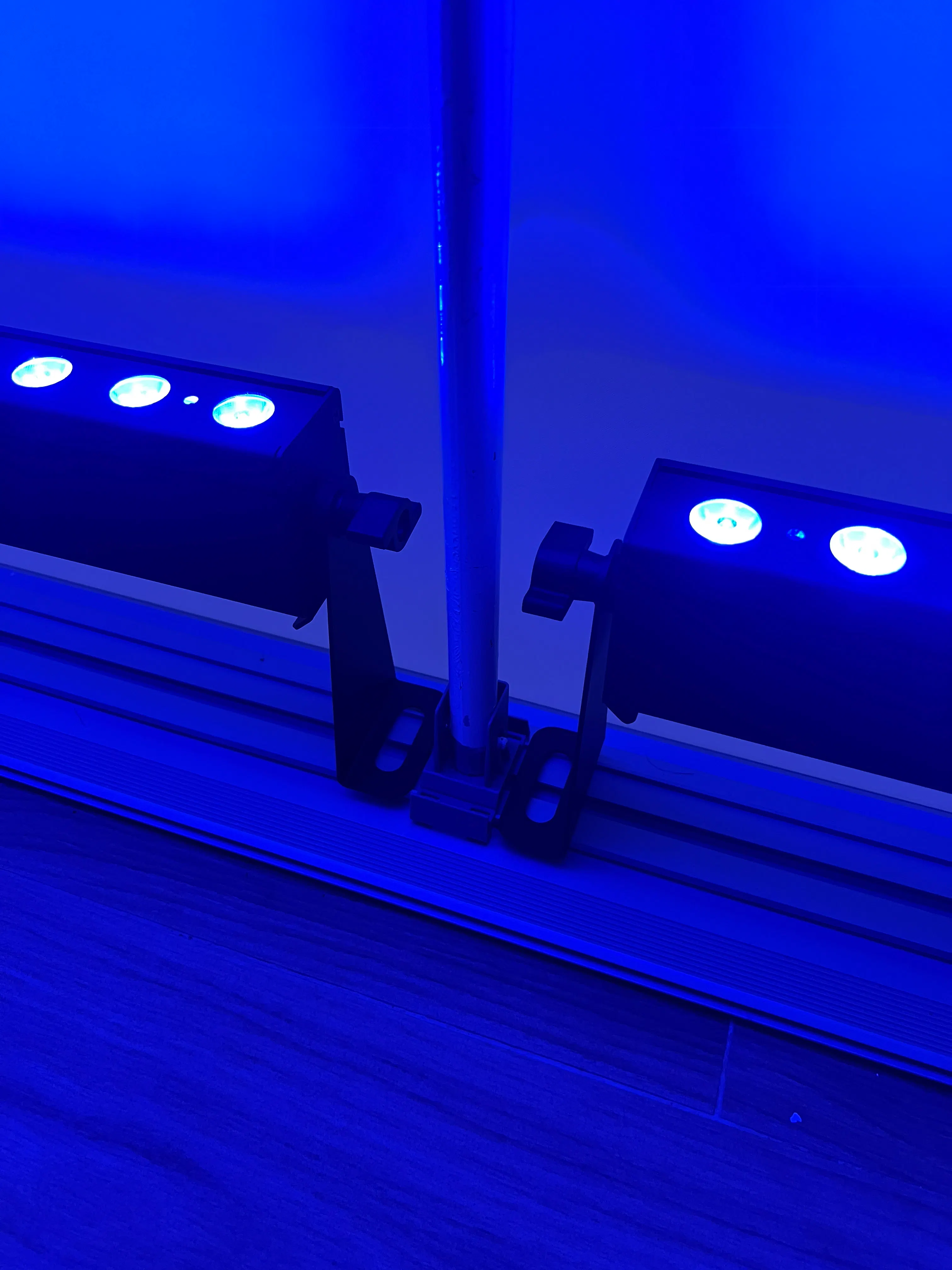
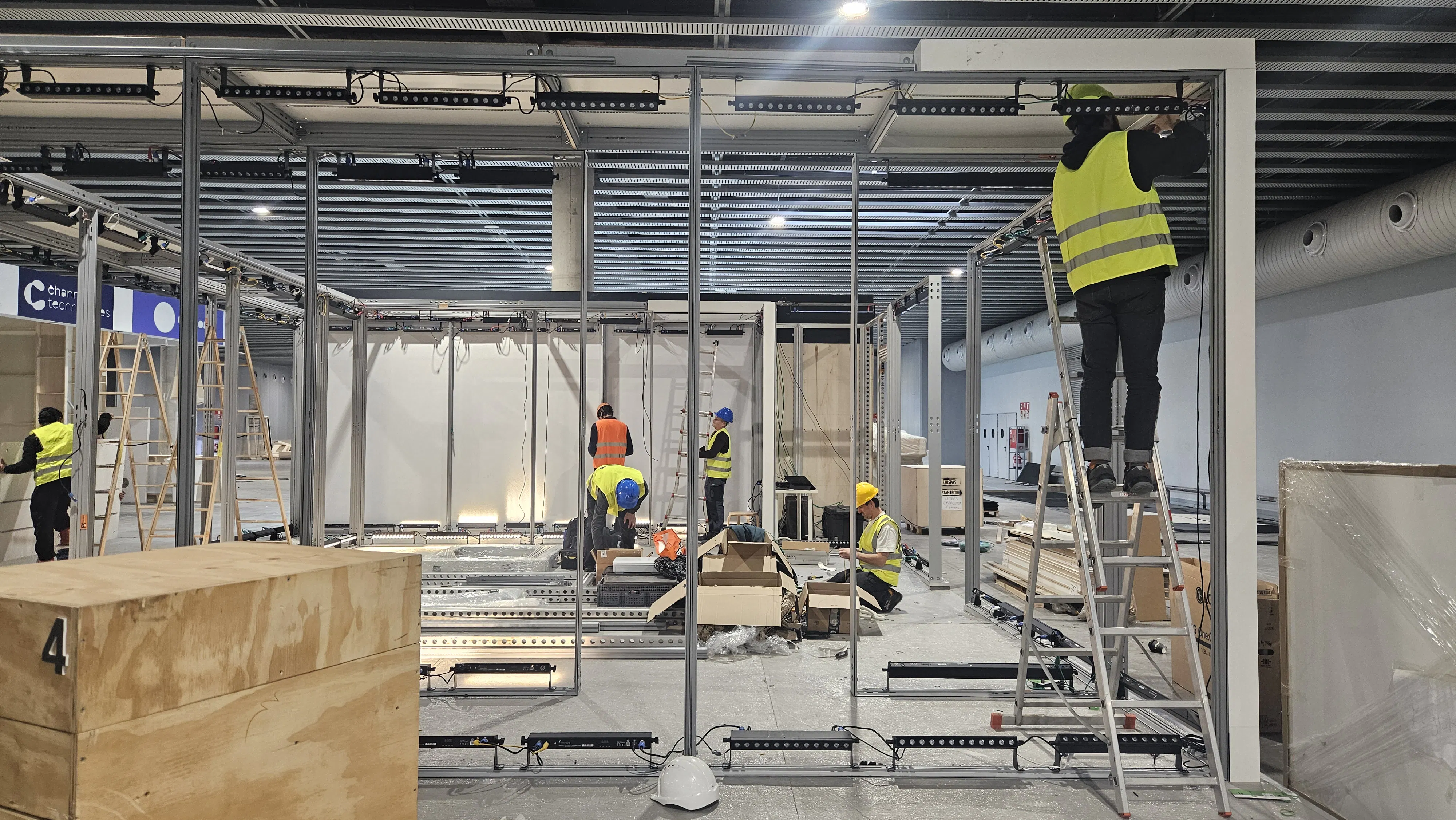
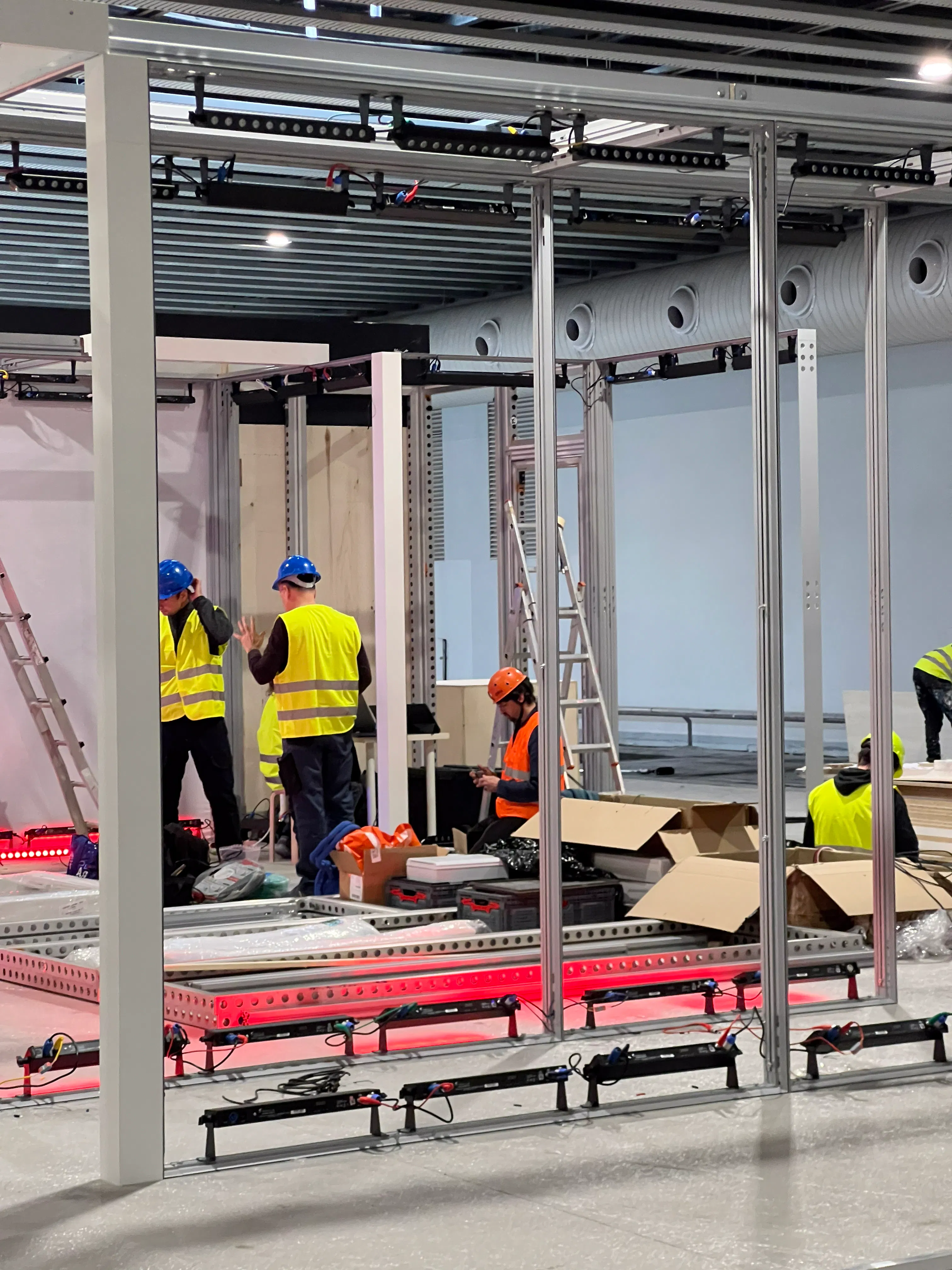
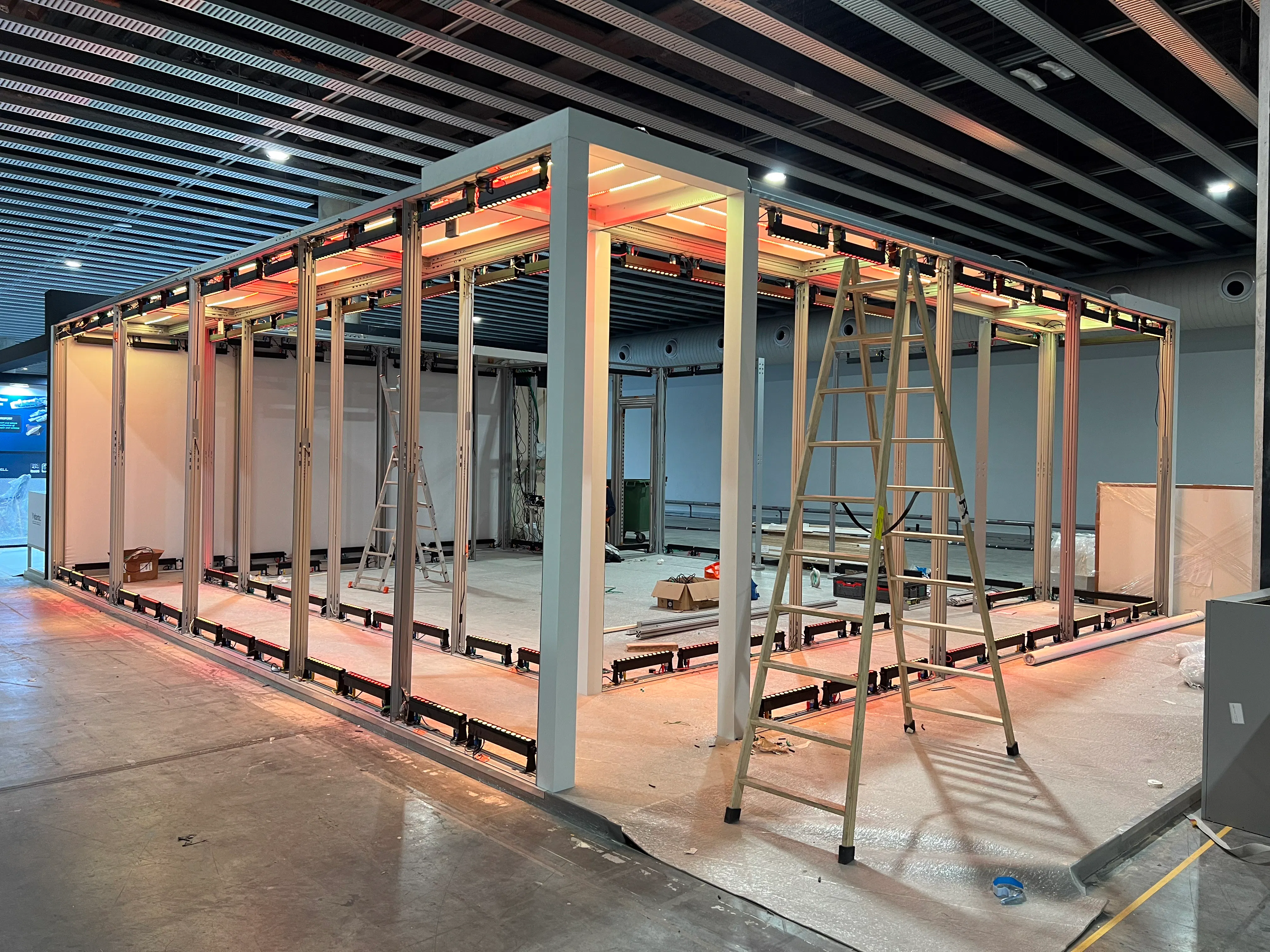
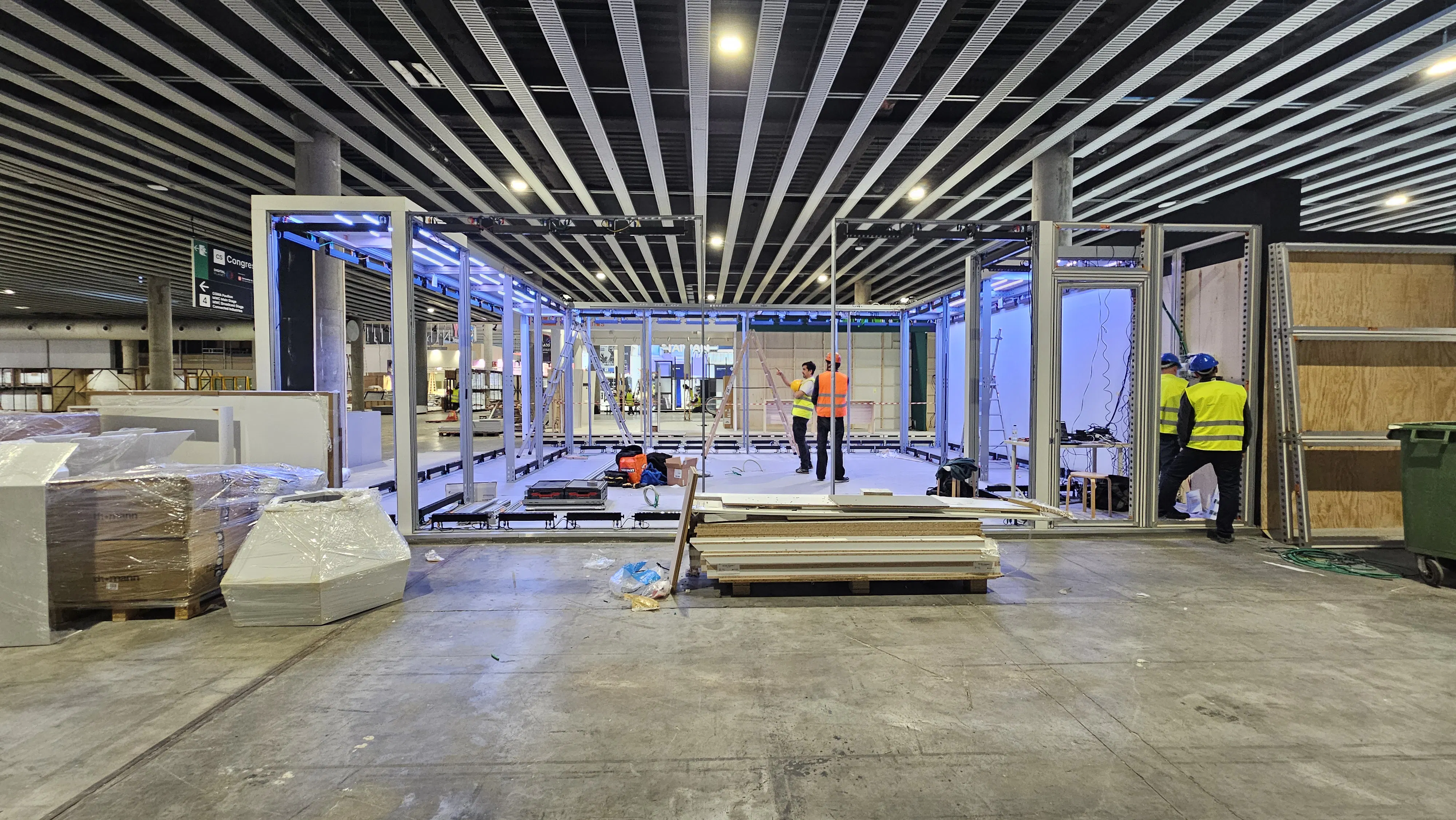
Digital RGB lighting system integrated into the corridor walls with DMX control via Resolume.
Femto Mega POE cameras for presence detection both in the hallways and in the sculpture.
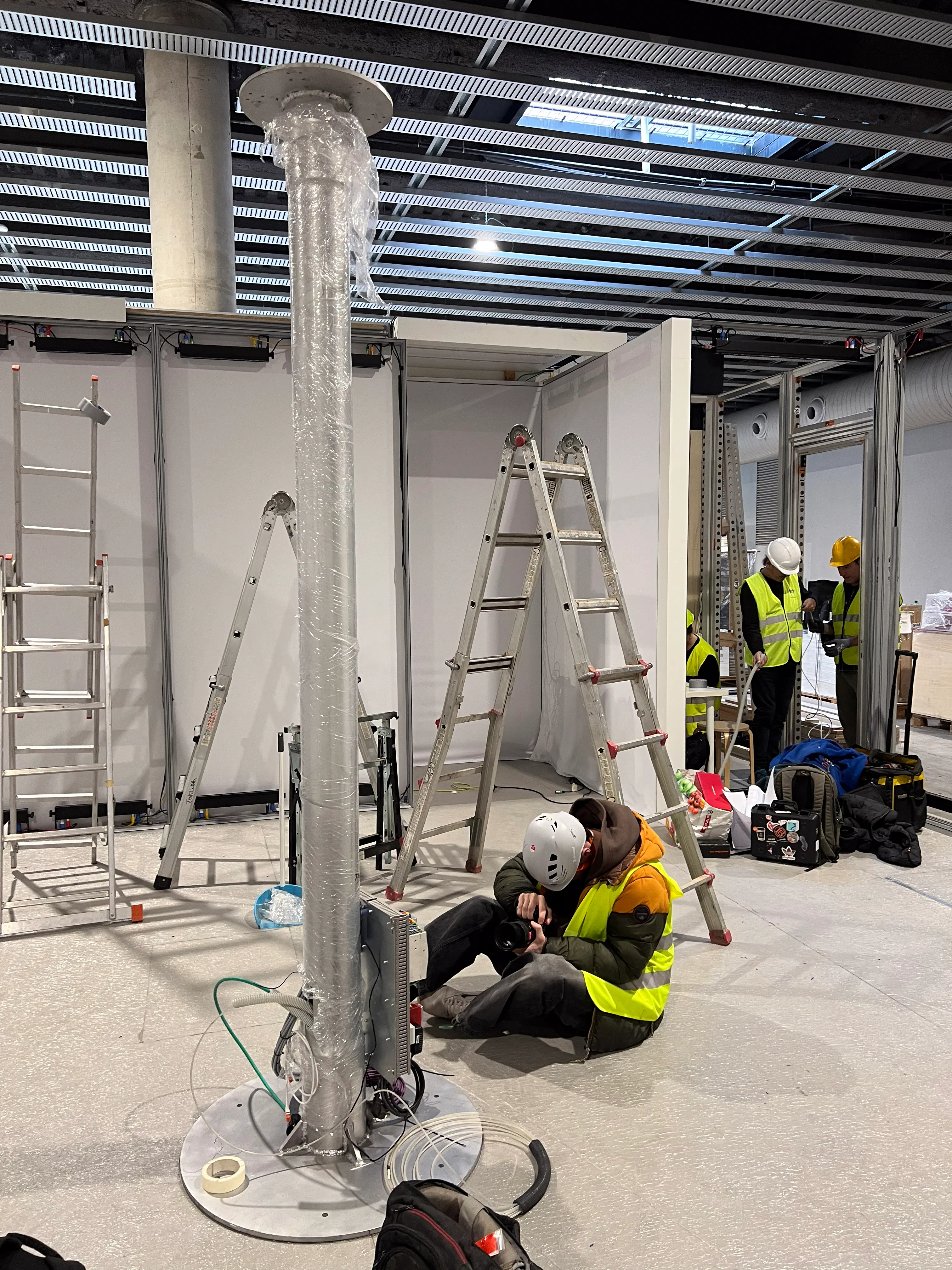
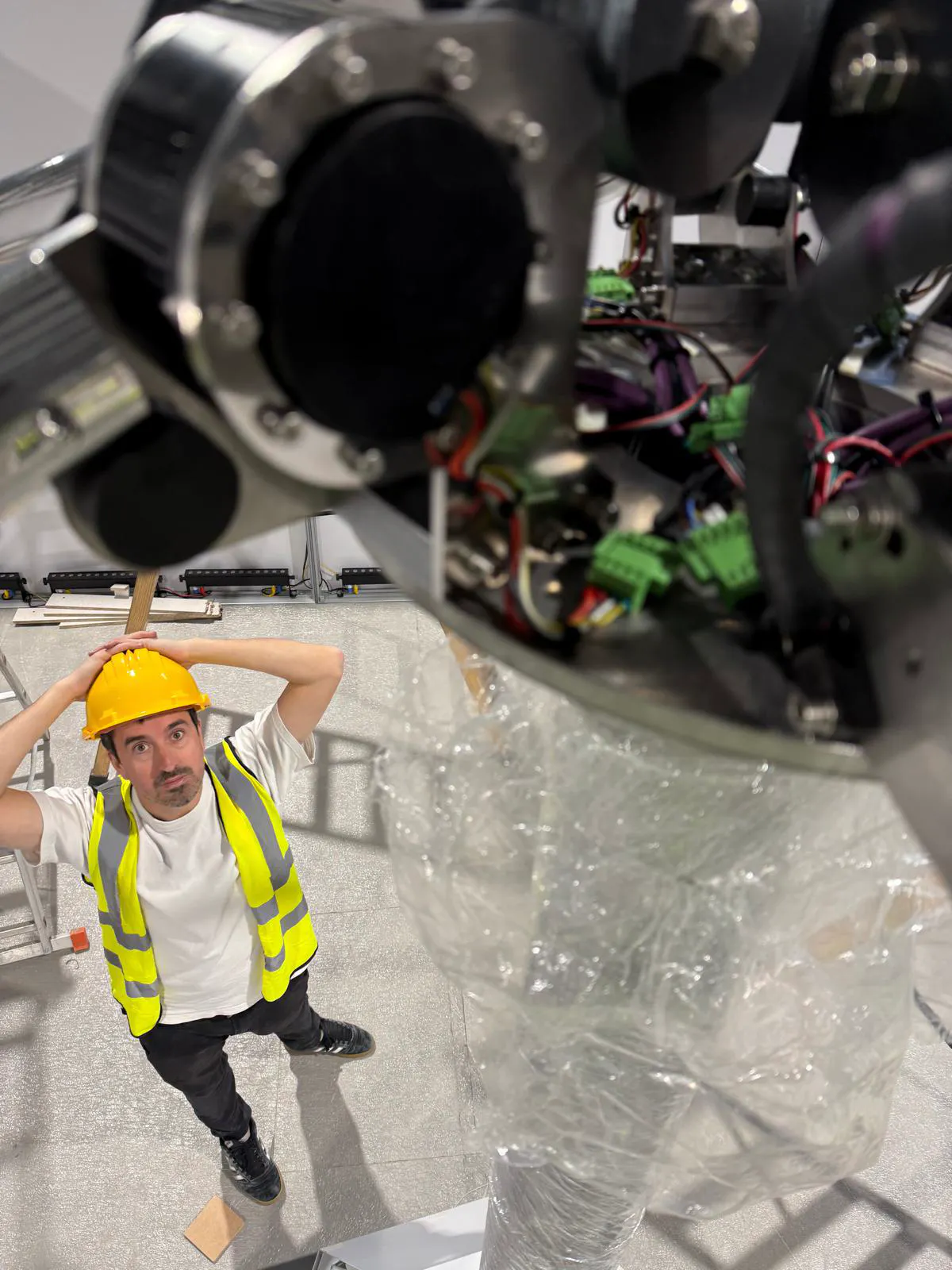
The central kinetic sculpture, consisting of six articulated arms with servomotors.
Real-time detection for the synchronization of light and movement.
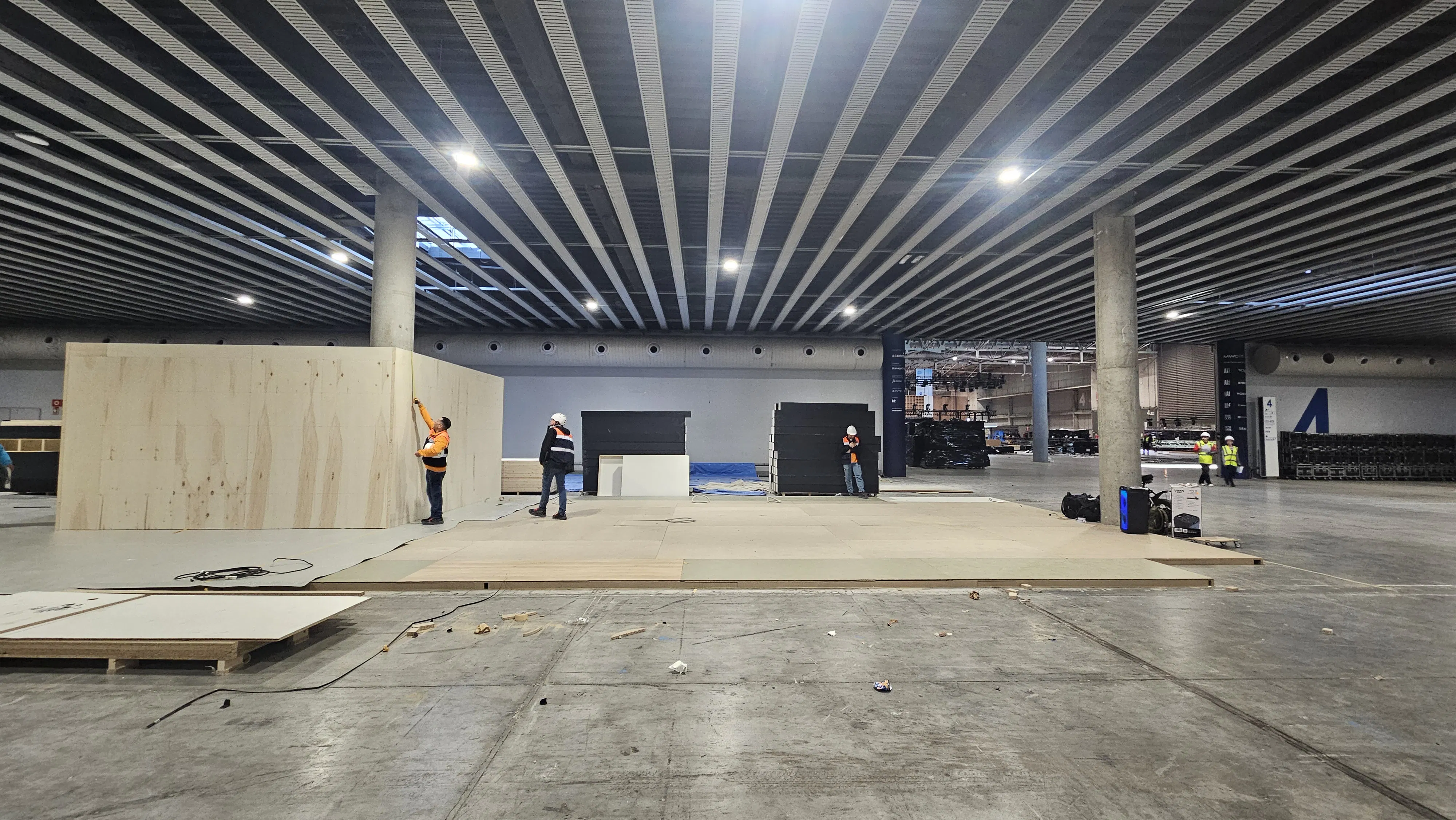
Modular structure designed for transport and temporary installation.
The project was also developed following sustainability and reuse criteria.